

Airline earnings Q3 2026: record revenue, fuel takes the profit
Airline earnings for Q3 2026: Delta, United and Southwest stayed profitable, American and Alaska lost money. Record revenue at four of them — and fuel up over 60%.
Airline alliances explained: how Star Alliance, oneworld and SkyTeam began, who belongs, what they give travellers, and how they differ from codeshares.
On 31 August 2024, Scandinavian Airlines left Star Alliance. The next morning, 1 September, it was a member of SkyTeam (Wikipedia: Star Alliance). Overnight, it had swapped one club of partner airlines — and everything that comes with it for its frequent flyers — for another.
So what is that club, exactly? An airline alliance is a cooperation agreement between two or more airlines: they link their networks, their loyalty programmes and their airport facilities so that a trip across several carriers feels like one trip. Today three global alliances dominate — Star Alliance, oneworld and SkyTeam.
No single airline flies everywhere. An alliance lets each member sell a much bigger map than it could fly alone, mostly by putting its code on partners’ flights (a codeshare) and by making connections between members smoother.
The idea is older than the brands. Wikipedia traces the first large alliance to a 1989 codesharing deal between Northwest Airlines and KLM. In 1992 the Netherlands signed an “open skies” agreement with the United States, and in return the US granted that partnership antitrust immunity — legal permission to coordinate in ways competitors normally can’t (Wikipedia: Airline alliance). The global brands followed within a decade.
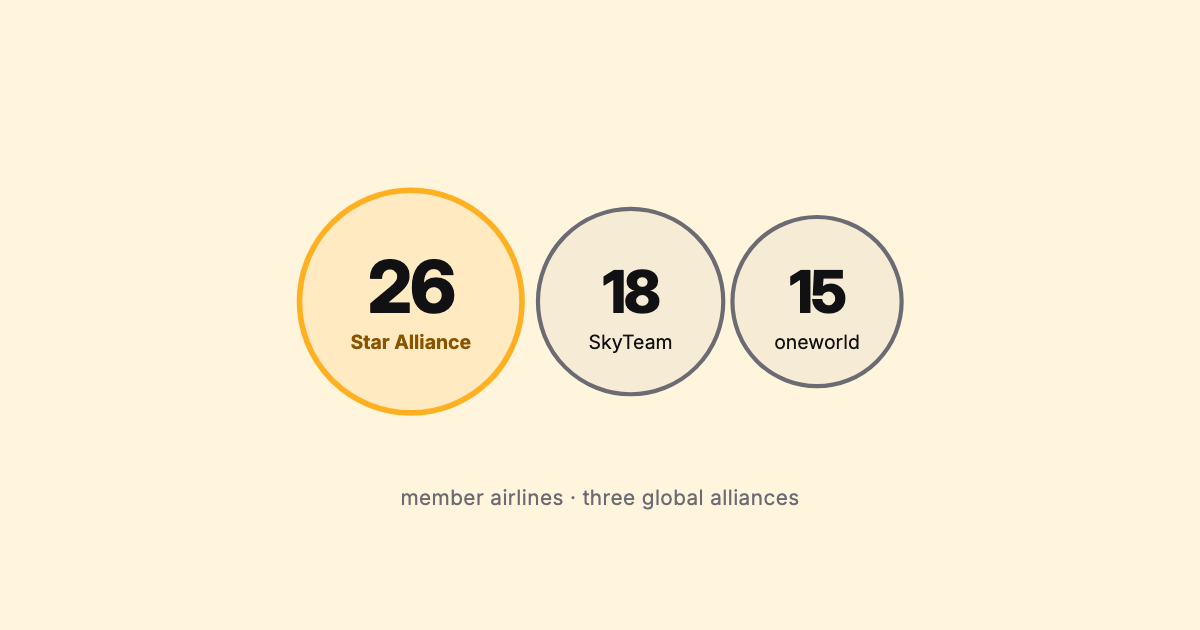
Star Alliance was the first global alliance. It was founded on 14 May 1997 by Air Canada, Lufthansa, Scandinavian Airlines, Thai Airways International and United Airlines, and is run from Frankfurt. It is also the largest, with 26 member airlines; the newest, ITA Airways, joined on 1 April 2026 (Wikipedia: Star Alliance; Loyalty Lobby).
oneworld was unveiled in London on 21 September 1998 and began operating on 1 February 1999. Its founders were American Airlines, British Airways, Canadian Airlines, Cathay Pacific and Qantas, and it is now based in Fort Worth, Texas (Wikipedia: oneworld). Its own member list shows 15 airlines, with Philippine Airlines marked as a future member, and a network of more than 900 destinations in 170 territories (oneworld: members). Philippine Airlines announced in June 2026 that it will join, with 2027 given as its joining year. Recent arrivals include Fiji Airways (a full member from 1 April 2025) and Oman Air (30 June 2025) (Wikipedia: oneworld).
SkyTeam was founded in New York on 22 June 2000 by Aeroméxico, Air France, Delta Air Lines and Korean Air, and is headquartered in Amstelveen, in the Netherlands. It has 18 member airlines (Wikipedia: SkyTeam; Loyalty Lobby: SkyTeam turns 25).
Membership moves more than people expect. Besides SAS’s overnight switch, ITA Airways left SkyTeam in 2025 after Lufthansa Group bought a 41% stake, then joined Star Alliance the following year (Wikipedia: SkyTeam).
For travellers, the benefits are practical (Wikipedia: Airline alliance):
There’s a flip side. Where partners stop competing on a route, prices can rise and flights can be cut — two airlines running three and two daily flights may, together, run fewer than five.
For airlines, the case is cost and reach. Members can share operations such as catering, computer systems and ground staff, and buy together for volume discounts (Wikipedia: Airline alliance). And a carrier can offer a city it will never fly to, by selling a partner’s flight from its own hub — the logic behind hub-and-spoke networks.
These three words get used interchangeably. They shouldn’t be — they are rungs on a ladder of how closely airlines work together.
The short version: a codeshare is a sales agreement, an alliance is a club, and a joint venture behaves almost like one airline on the routes it covers.
Alliances show up in schedule data mostly as codeshares: one flight in the air, several flight numbers on sale. Count each number as its own flight and a route looks far busier than it is. Telling the operating flight apart from its marketing codes is part of reading a schedule correctly. SSIM Toolkit reads a raw SSIM schedule file in full and turns it into flights you can question.
Sources
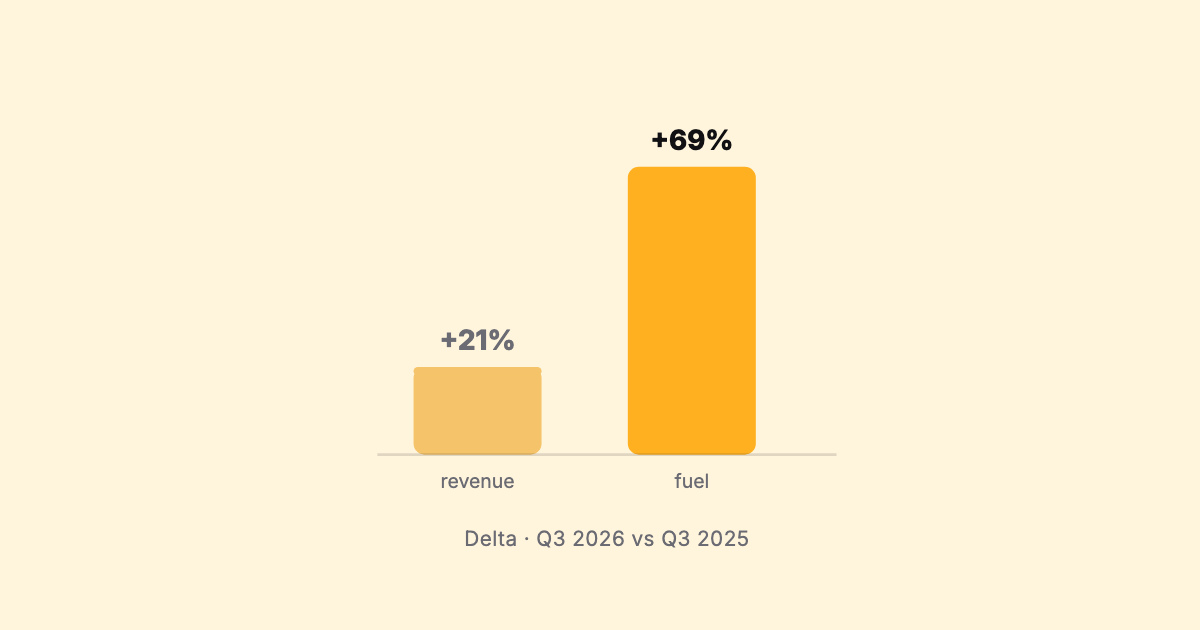
Airline earnings for Q3 2026: Delta, United and Southwest stayed profitable, American and Alaska lost money. Record revenue at four of them — and fuel up over 60%.
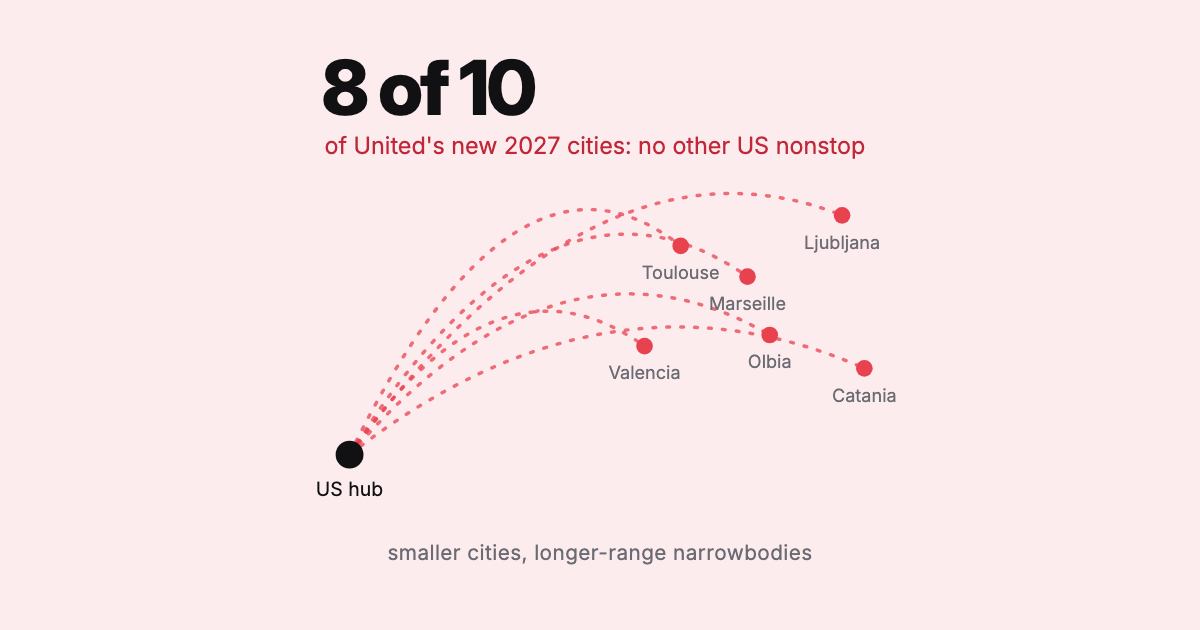
Airline route growth for 2027: US airlines head for Europe's smaller cities, Air Canada adds five cities, Riyadh Air scales up and Ryanair shifts to Italy.
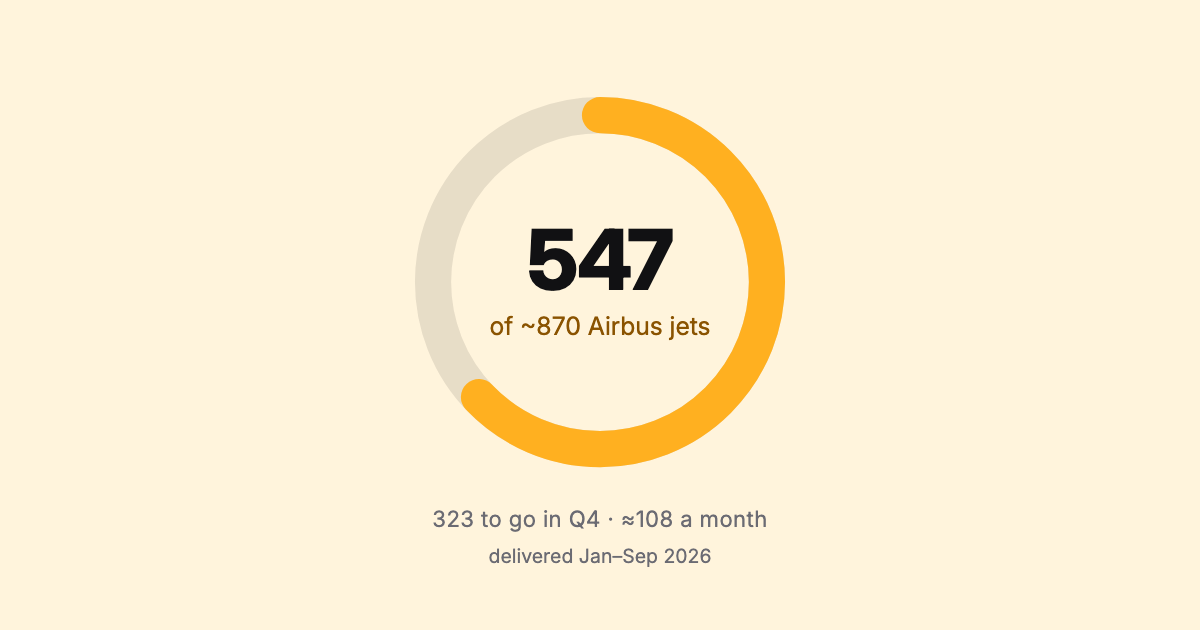
Q3 2026 aircraft deliveries: Airbus has 547 jets out the door and needs about 108 a month to hit 870; Boeing delivered 161. What it means for next summer.