


Why counting flights and seats from SSIM is harder than it looks
Weekly frequencies and seats are the first figures anyone wants from a schedule — and the ones most often wrong. The traps behind the numbers, and why they matter.
Active Flights · Blog
8 articles tagged #capacity.
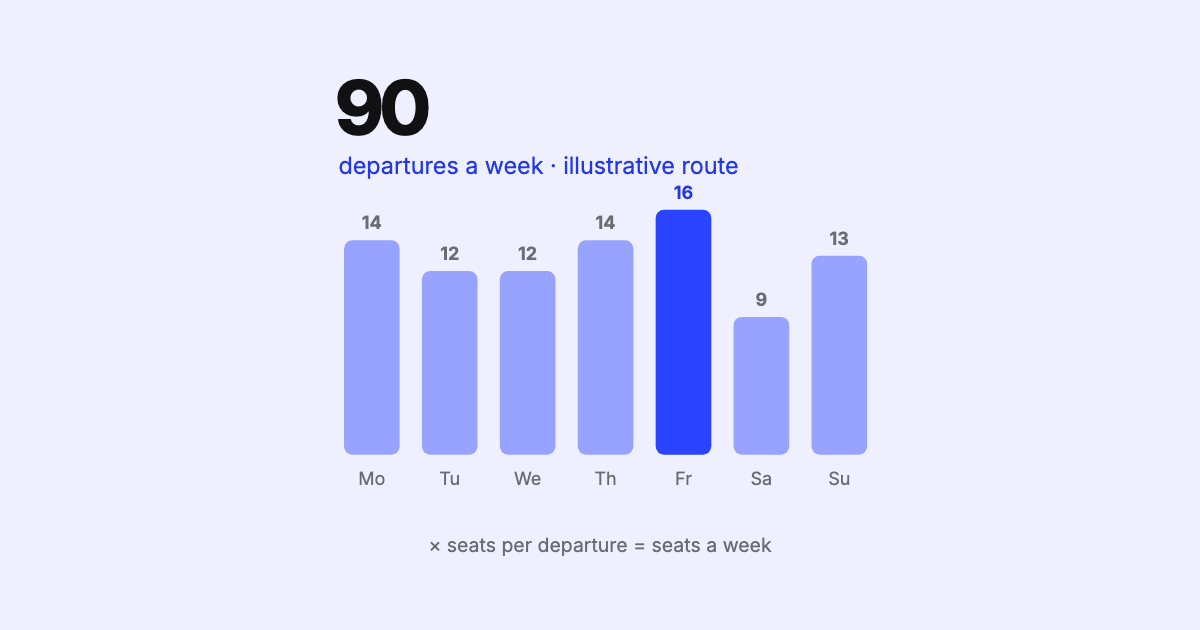
Weekly frequencies and seats are the first figures anyone wants from a schedule — and the ones most often wrong. The traps behind the numbers, and why they matter.
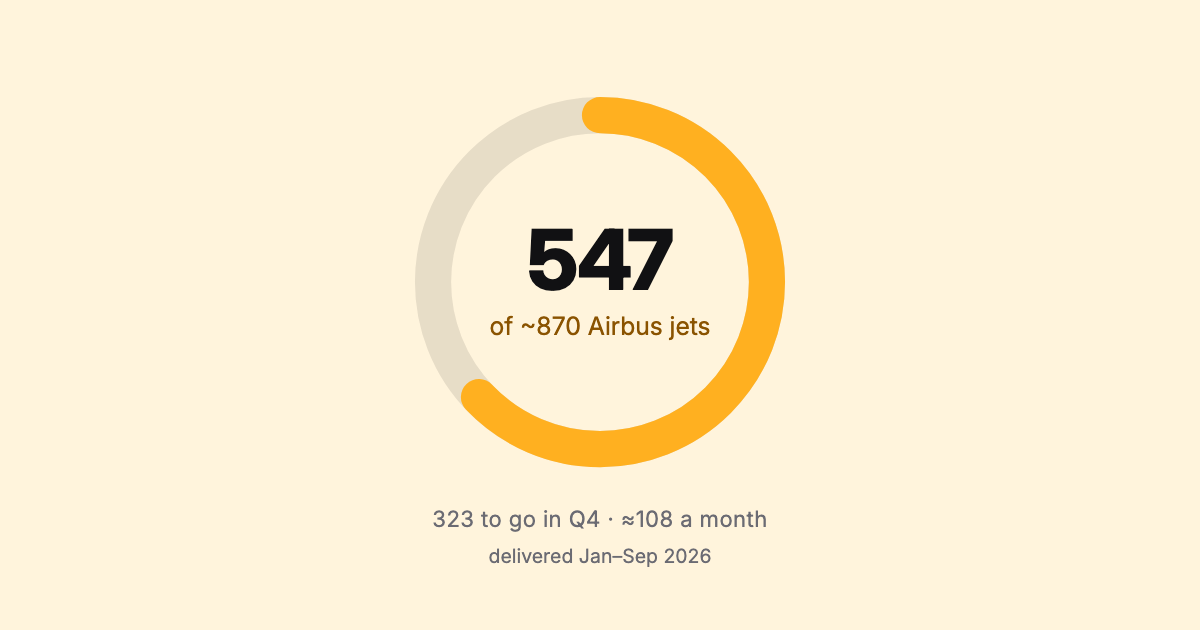
Q3 2026 aircraft deliveries: Airbus has 547 jets out the door and needs about 108 a month to hit 870; Boeing delivered 161. What it means for next summer.
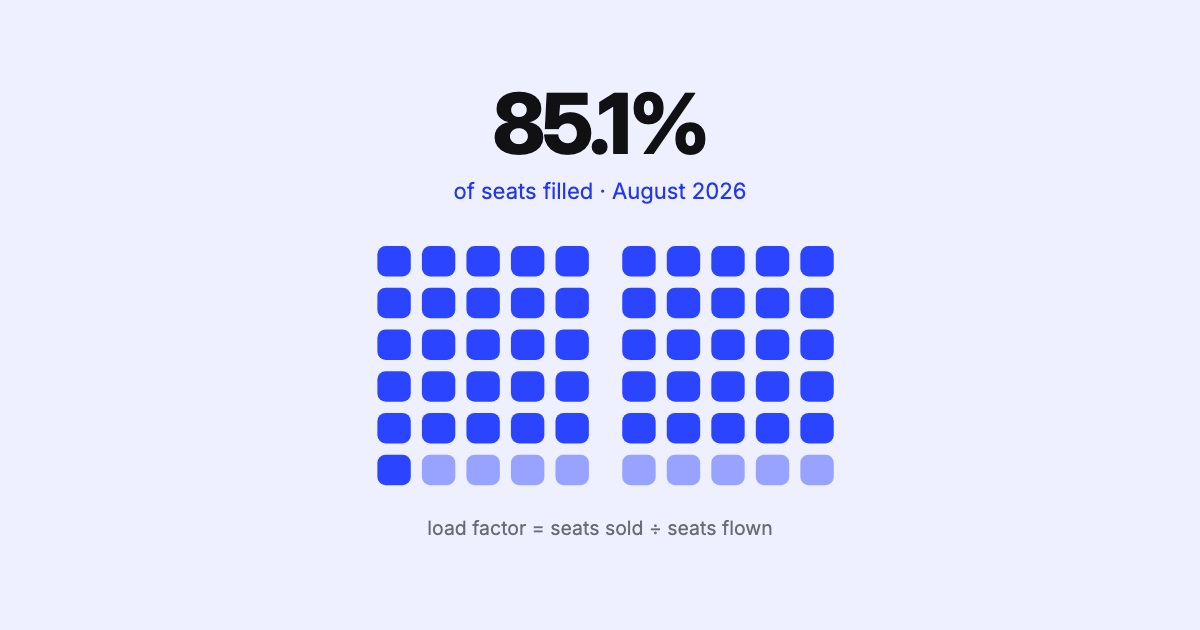
Airline load factor is the share of seats an airline fills. How it's calculated, why it hit a record 83.6% in 2025, and what a full plane doesn't tell you.
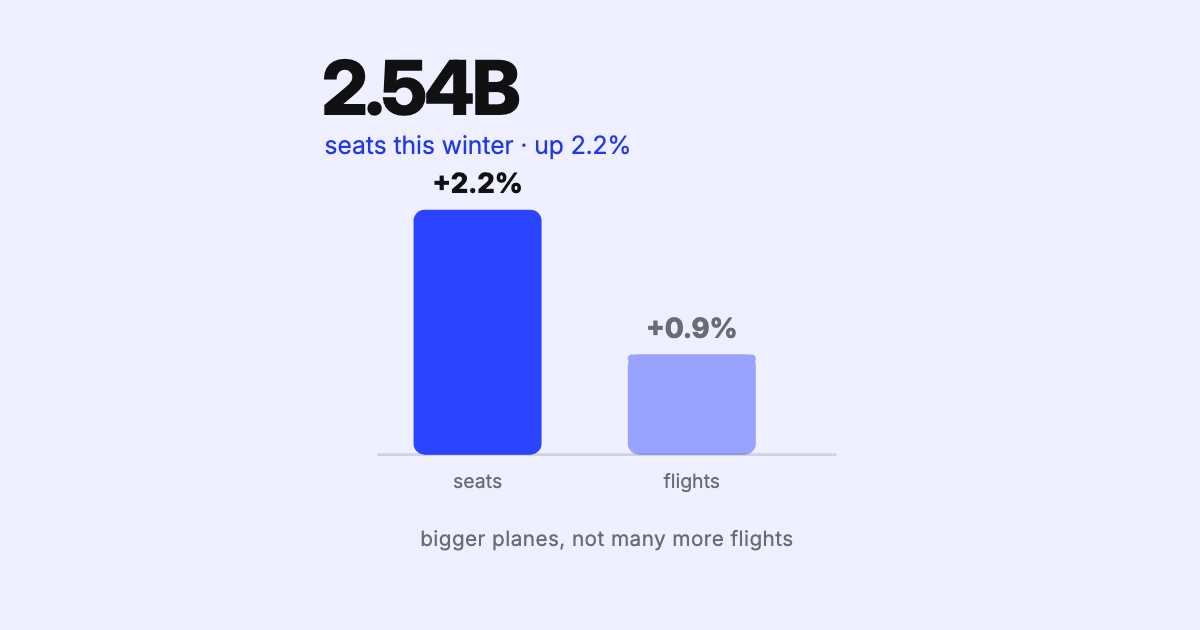
The winter 2026/27 schedule began on 25 October. Seats are up 2.2% worldwide on fewer extra flights: Italy, Brazil and Spain grow, Germany and Russia shrink.
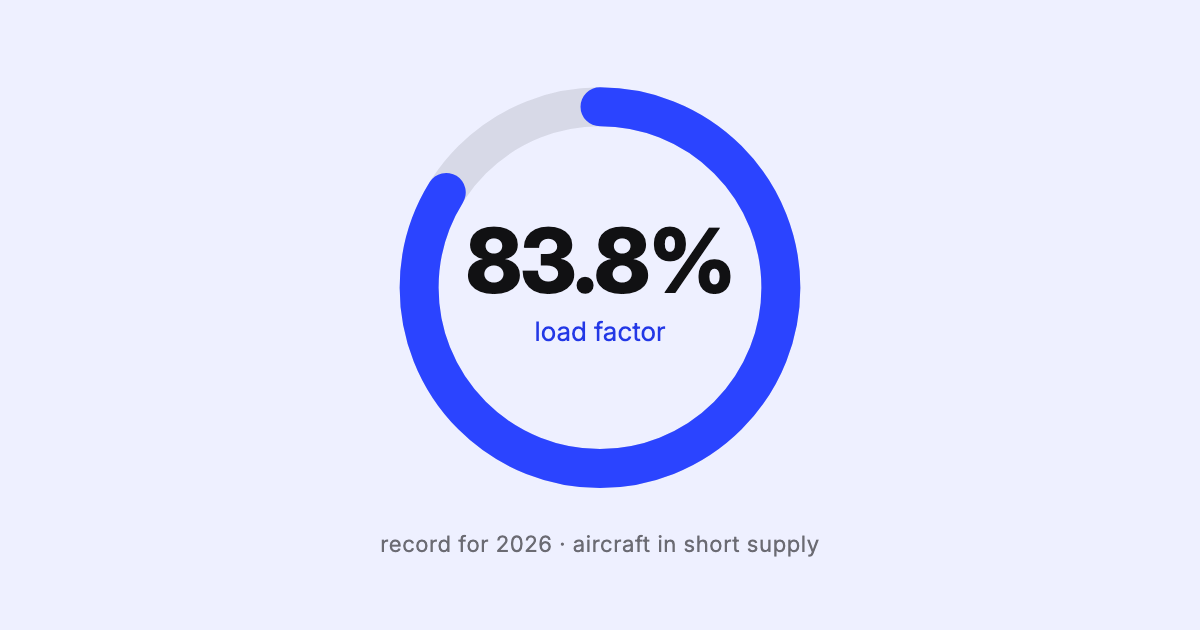
Airlines are flying at record load factors on a ~3.9% net margin while new aircraft stay scarce. When every seat counts this much, the schedule is where efficiency is won or lost.
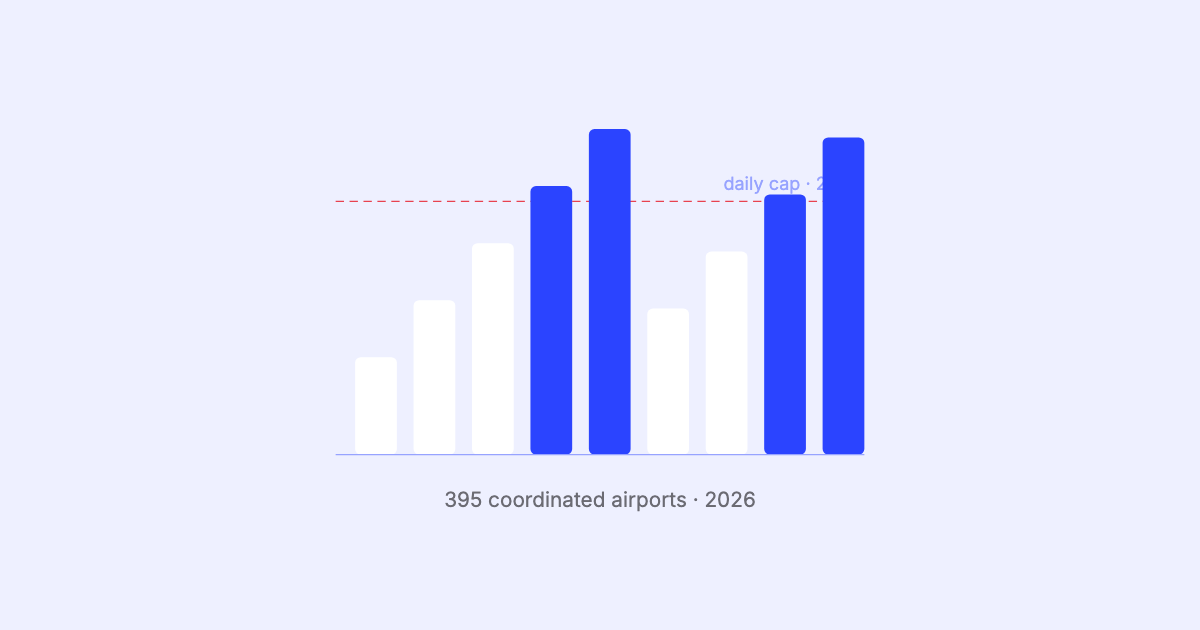
Nearly 400 airports worldwide restrict who can operate and when in 2026, and around 43% of global departures leave a slot-coordinated field. Here's the 2026 landscape — and why a published schedule and its slot holdings have to agree.
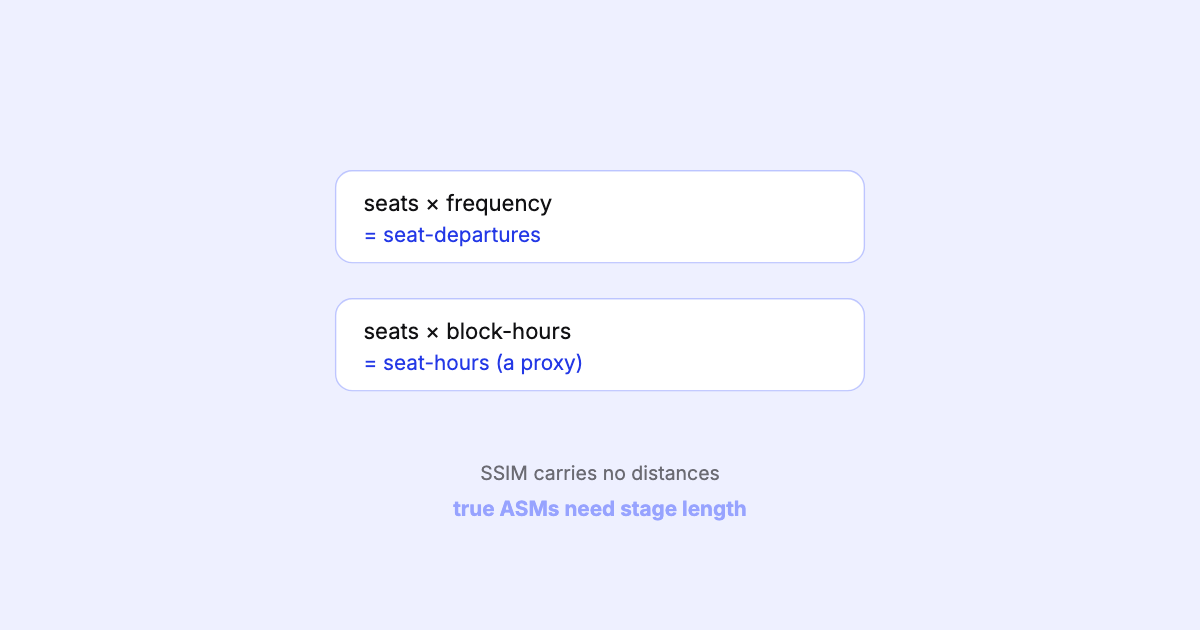
SSIM carries seats and times but no stage lengths, so you can't compute true available seat-miles from the file alone. Here's what you can honestly measure — and where the proxy ends.
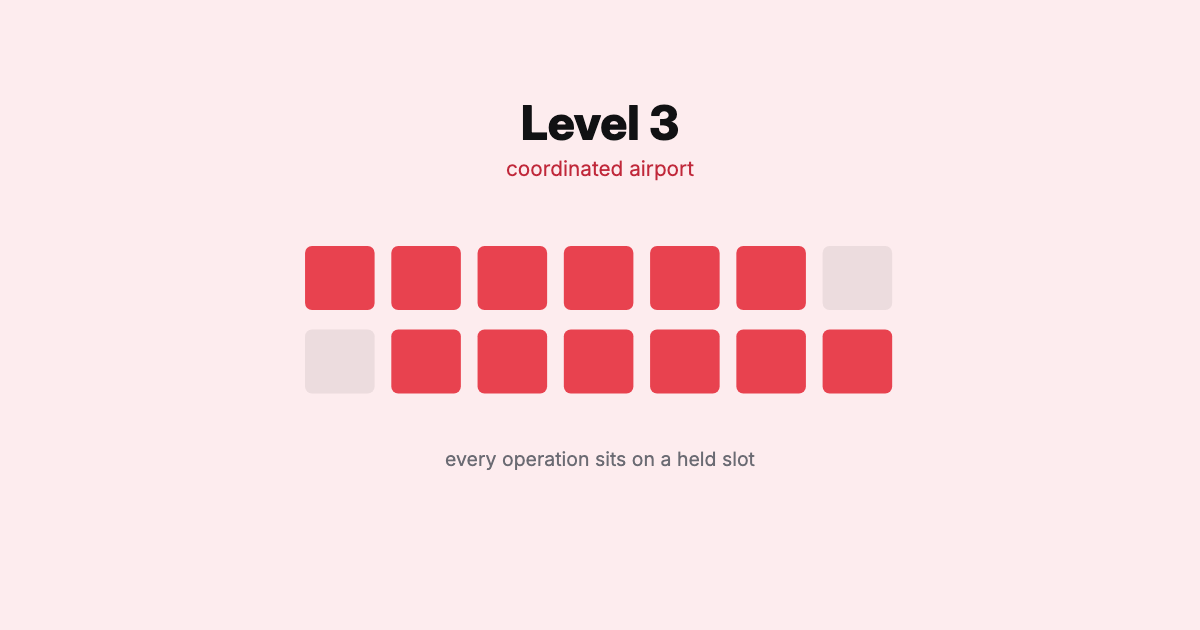
At the world's busiest airports you can't just publish a flight — you need a slot. Here's how slot coordination works, the three airport levels, and why the schedule and the slot book have to agree.