


Q3 2026 aircraft deliveries: Airbus and Boeing vs their targets
Q3 2026 aircraft deliveries: Airbus has 547 jets out the door and needs about 108 a month to hit 870; Boeing delivered 161. What it means for next summer.
The winter 2026/27 schedule began on 25 October. Seats are up 2.2% worldwide on fewer extra flights: Italy, Brazil and Spain grow, Germany and Russia shrink.
On Sunday 25 October, the airline world quietly switched timetables. The northern winter 2026/27 schedule season began, and with it a new set of routes, frequencies and aircraft that will run until the end of March. Here is what airlines changed for this winter — where they are adding seats, where they are pulling back, and the long-haul routes that started this week.
Airlines plan in two seasons, not twelve months. The northern summer runs from the last Sunday of March; the northern winter from the last Sunday of October. Each season gets its own timetable, because demand moves: beach routes thin out, ski and winter-sun routes appear, and aircraft get moved to wherever this season’s travellers are. (We explain the mechanics in how airlines rebuild the schedule twice a year.)
So the changeover weekend is the moment the new plan becomes real flying.
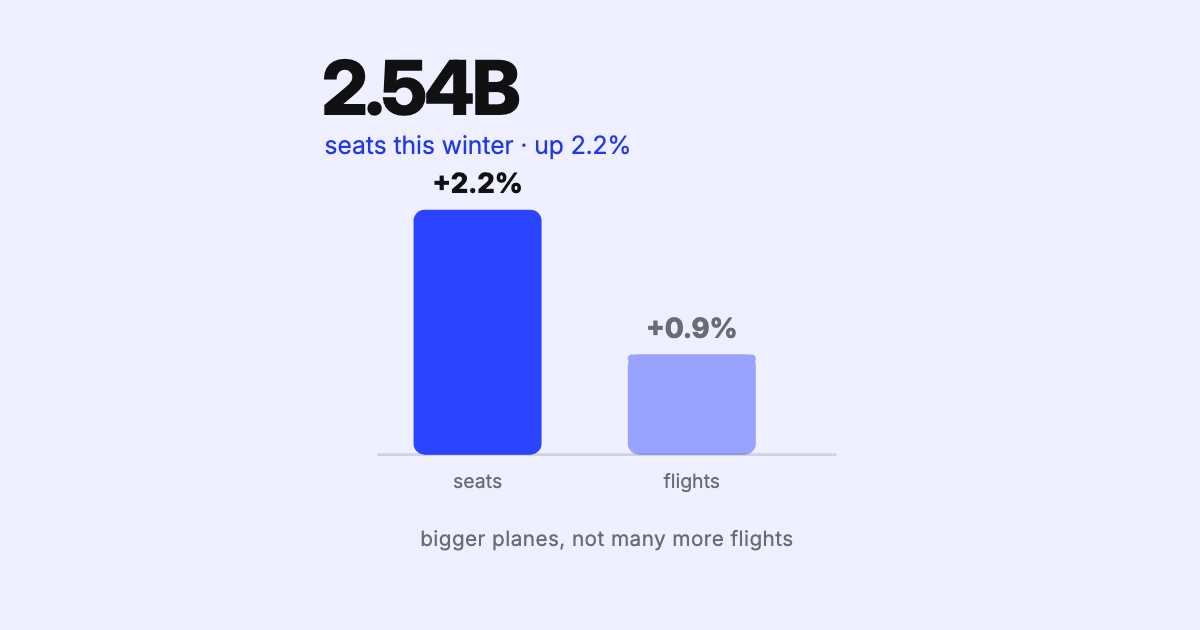
According to OAG schedule data reported by Aviation Week, airlines have scheduled about 2.54 billion departure seats worldwide for this winter — up 2.2% on last winter’s 2.49 billion. The number of flights is growing much more slowly: departures are up only 0.9%, to about 15.7 million.
That gap is the story in one line. Airlines are adding capacity partly through bigger aircraft and denser cabins — the average departure now carries about 162 seats, up from about 160 — rather than adding lots of new flights.
It fits the year. With jet fuel expensive — this year’s fuel shock — getting more seats out of each flight you already operate is the cheaper way to grow.
The growth is not spread evenly. Among big markets, the same OAG figures show:
At airport level, Chicago O’Hare is the single biggest gainer, adding about 2.7 million seats (up 13%) as American and United both grow there. Abu Dhabi (+16.9%), Rome Fiumicino (+12.9%), San Francisco (+11.3%) and Riyadh (+10.7%) are also growing fast. Aviation Week notes that part of Abu Dhabi’s jump simply reflects how disrupted last winter was after the Middle East conflict that began in late February 2026.
Some mid-sized leisure airports are booming: Palermo is up 47.4%, Tirana 37.2% and Catania 23.7%.
Germany is the clearest example in Europe. OAG data shows seats from German airports down 1.3% this winter and flights down 3.9%, with domestic seats down 8.8%. Lufthansa’s mainline capacity in Germany is cut 9.3%, partly as the group moves flying to its Eurowings subsidiary (up 4.6%), and Ryanair’s German capacity is down 9.9%. Smaller airports such as Bremen (−17.7%) and Stuttgart (−12.8%) feel it most.
Further afield, Russia loses 13% of its seats — the biggest absolute drop of any country — and Iran is down 48.3%.
Low-cost giant Ryanair shows how fuel prices are shaping the season. In July it launched what it called a record winter schedule of around 1,700 routes, including more than 140 new ones. By late September, Aviation Week reported that the airline was cutting some winter flying to limit its exposure to high jet-fuel prices. The OAG figures show Ryanair’s winter seats broadly unchanged on last year.
The changeover weekend brought a cluster of headline launches:
And on the winter-sun side, UK leisure airline Jet2 has its biggest winter ever: 6.3 million seats (up 8.7%), 34 new routes and a return to Egypt’s Sharm el Sheikh and Hurghada after 15 years.
The winter 2026/27 schedule is a careful one. Airlines are growing where demand and costs line up — southern Europe, Brazil, big US hubs, the Gulf — and trimming elsewhere, with Germany and Russia the clearest cases. They are doing it mostly by making each flight bigger, not by adding many more of them.
For anyone working with schedules, the changeover is when “what changed between these two seasons” becomes the question of the week — and why counting seats and frequencies correctly matters. That comparison is exactly what SSIM Toolkit is built to answer from the schedule files themselves, on your own machine.
Seat and departure figures are OAG schedule data as reported by Aviation Week in October 2026, and can change as airlines adjust their schedules during the season.
Sources
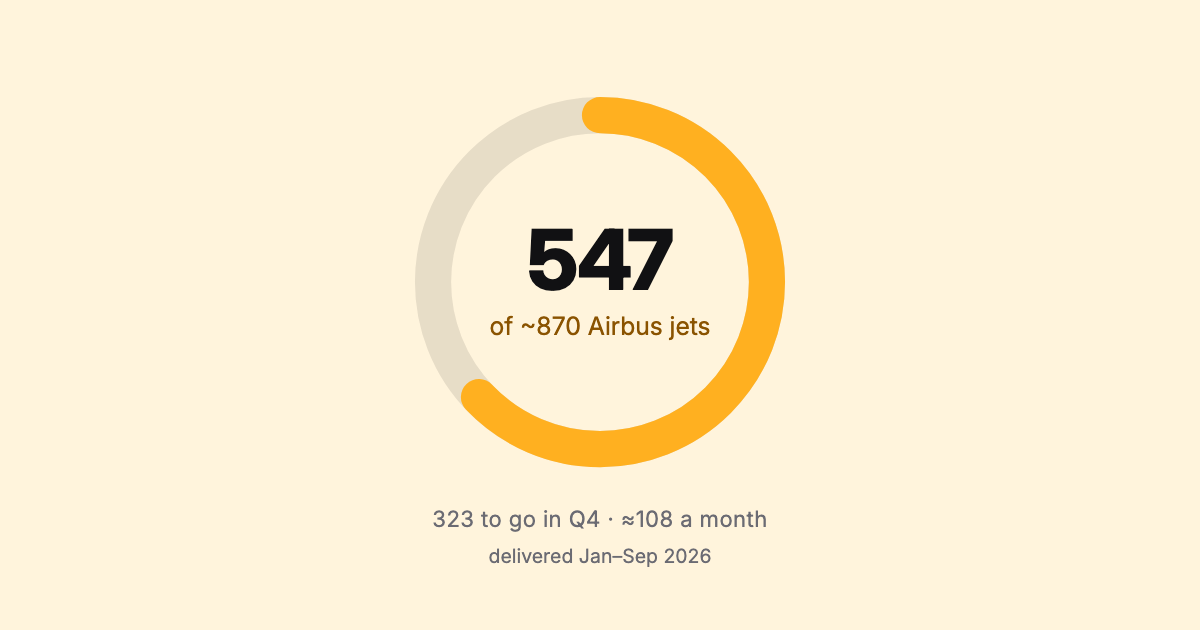
Q3 2026 aircraft deliveries: Airbus has 547 jets out the door and needs about 108 a month to hit 870; Boeing delivered 161. What it means for next summer.
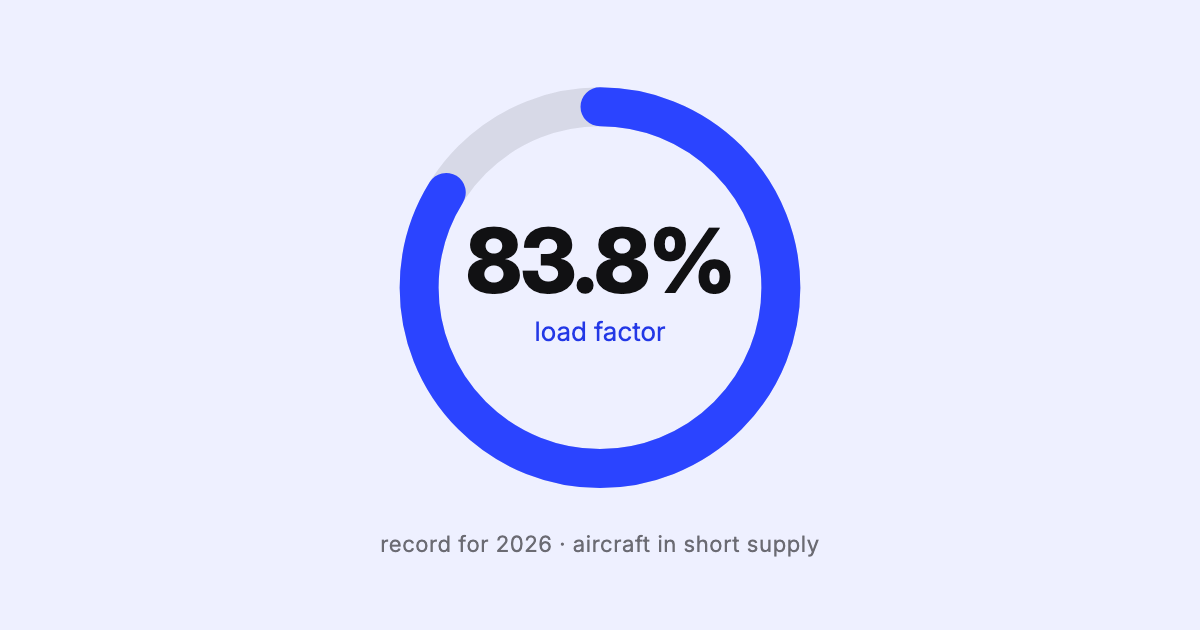
Airlines are flying at record load factors on a ~3.9% net margin while new aircraft stay scarce. When every seat counts this much, the schedule is where efficiency is won or lost.
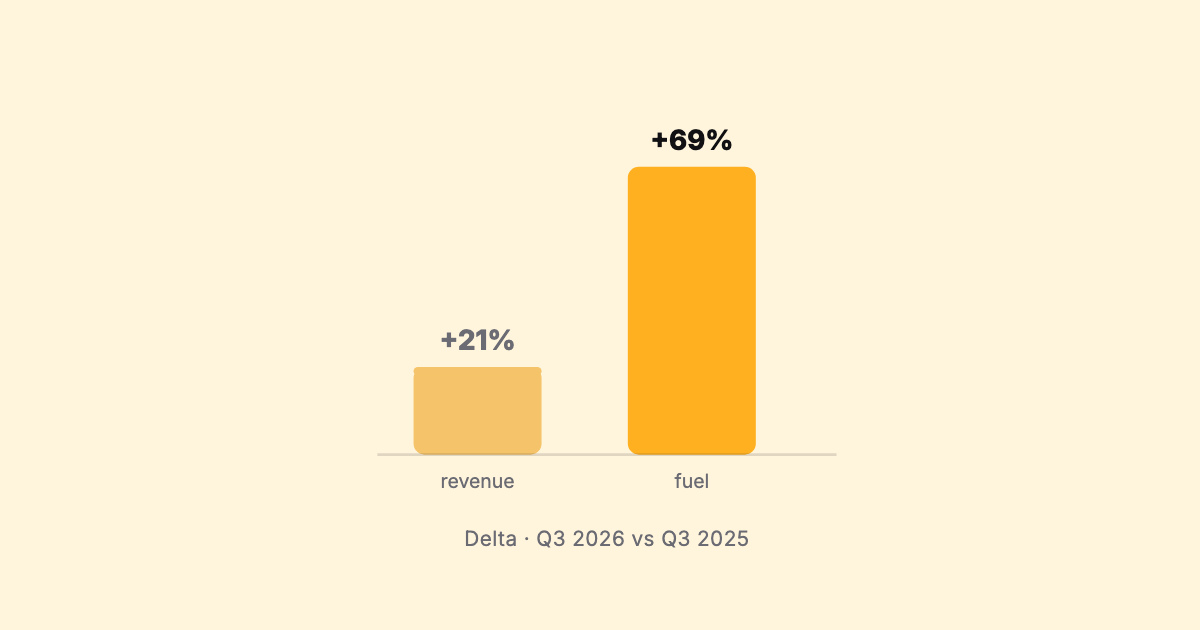
Airline earnings for Q3 2026: Delta, United and Southwest stayed profitable, American and Alaska lost money. Record revenue at four of them — and fuel up over 60%.