
#2026
9 articles tagged #2026.
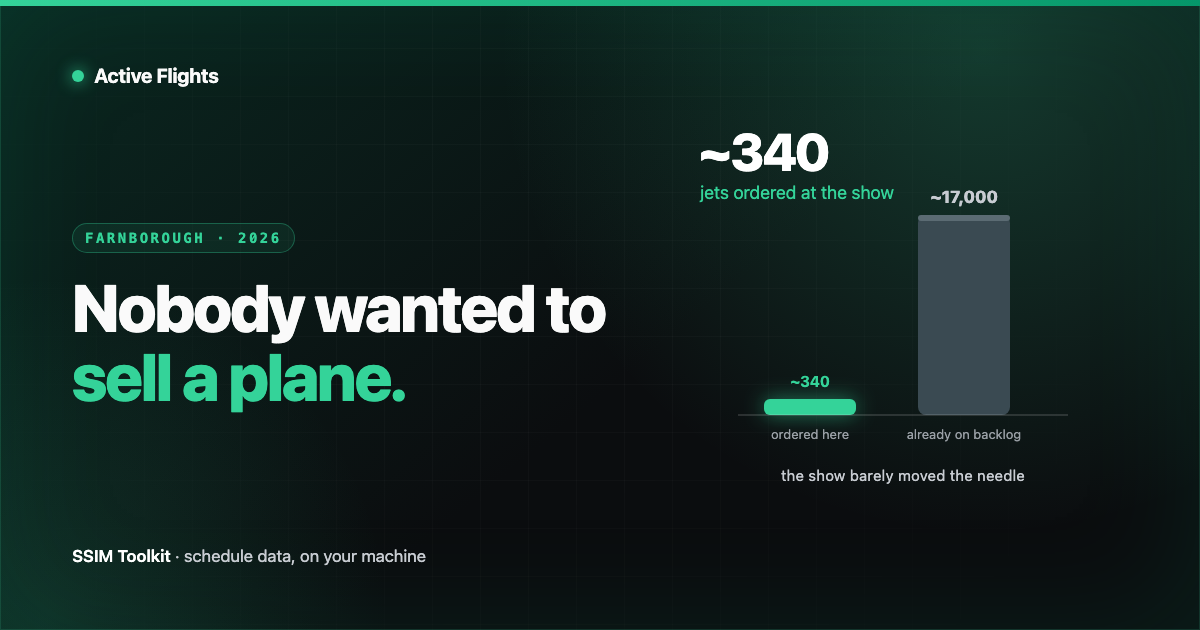
Farnborough 2026: the airshow where nobody wanted to sell you a plane
Once every two years the aviation world gathers to buy jets by the hundred. This year Boeing and Airbus mostly said no — not because demand is weak, but because they're sold out for years. The scarce thing at the airshow wasn't a customer. It was a delivery slot.
The airport king wants wings: is Adani about to launch an airline?
Adani runs eight of India's airports — and reportedly asked the government to scrap the one rule stopping it from owning an airline. Then it called the whole idea 'baseless.' Here's what's really going on, and why an airport empire might want a plane.
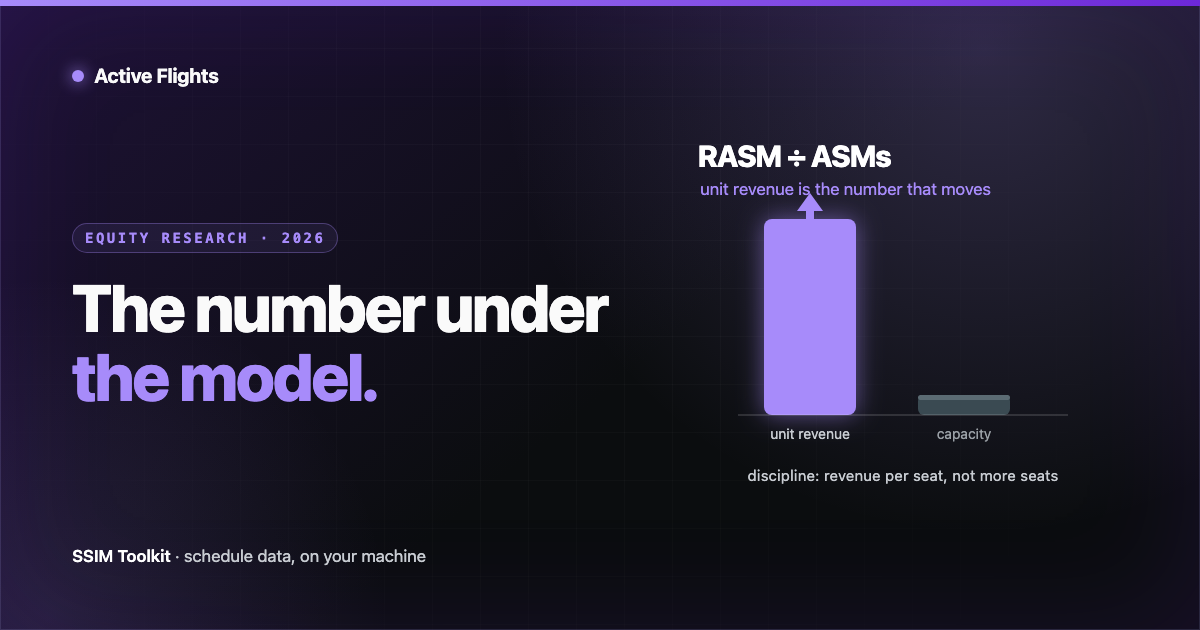
The unit economics of an airline: what equity researchers model — and where the number comes from
Airline stocks turn on unit revenue and unit cost — RASM and CASM per available seat mile. In 2026, carriers are posting double-digit RASM growth on ~1% more capacity. The denominator under every one of those metrics is the schedule.
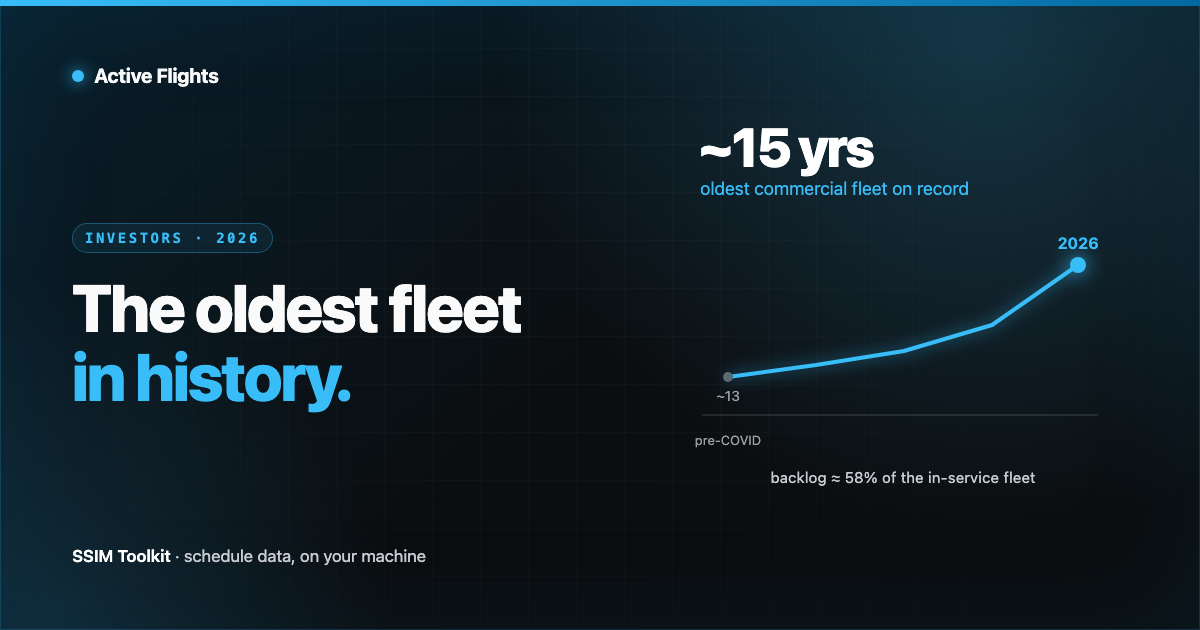
The oldest fleet in history: why aircraft won't retire — and where the value goes instead
While Farnborough fills with orders for jets that arrive in the 2030s, the global fleet has quietly aged to a record ~15 years. Retirements are deferred, the installed base is where the money is, and the schedule is where an aging fleet is won or lost.
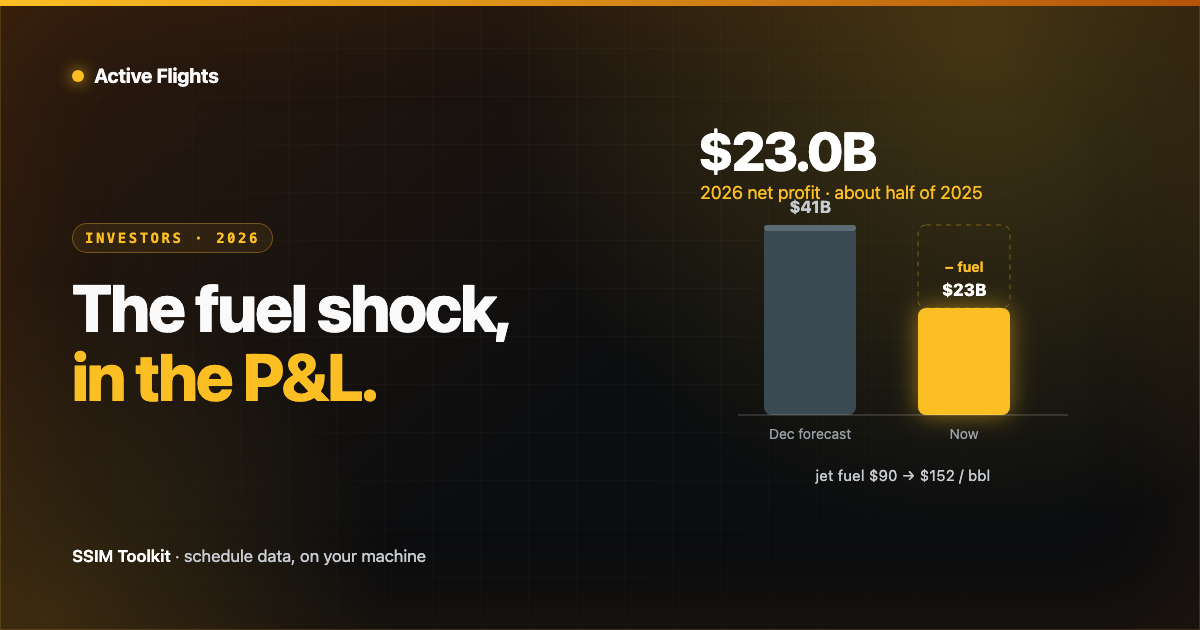
The 2026 fuel shock: airline profits halve, and the schedule becomes the margin defense
IATA now sees 2026 industry net profit at $23B — roughly half of last year — as jet fuel jumps from $90 to $152 a barrel. Demand is still strong and carriers are beating estimates. For investors, the gap between the two is the whole story.
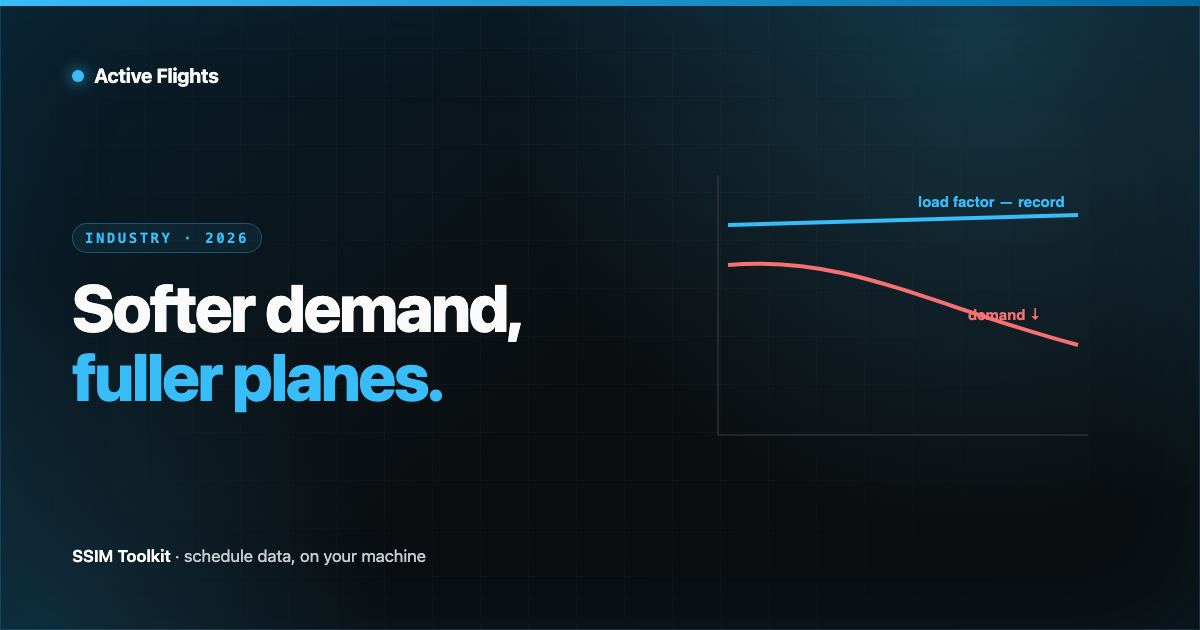
Softer demand, fuller planes: reading IATA's mid-2026 numbers
In May 2026 global air travel demand actually fell year-on-year — yet load factors hit a record for the month. That apparent contradiction says a lot about how tight, and how regional, the 2026 network has become.
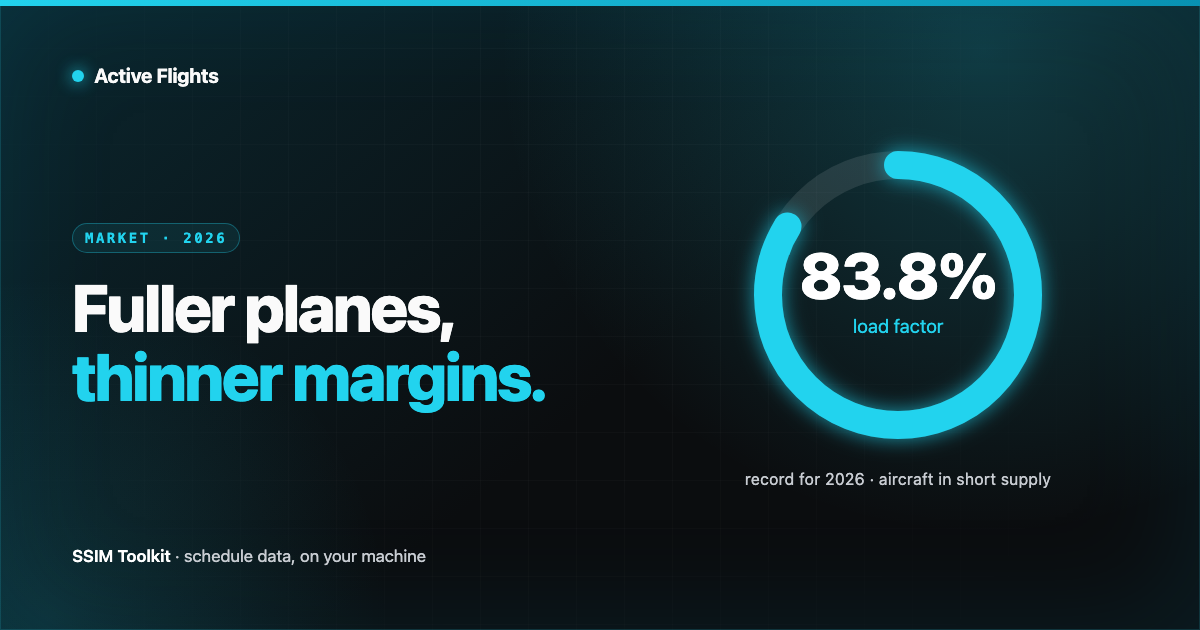
The 2026 capacity squeeze: fuller planes, thinner margins, and the pressure on schedule data
Airlines are flying at record load factors on a ~3.9% net margin while new aircraft stay scarce. When every seat counts this much, the schedule is where efficiency is won or lost.
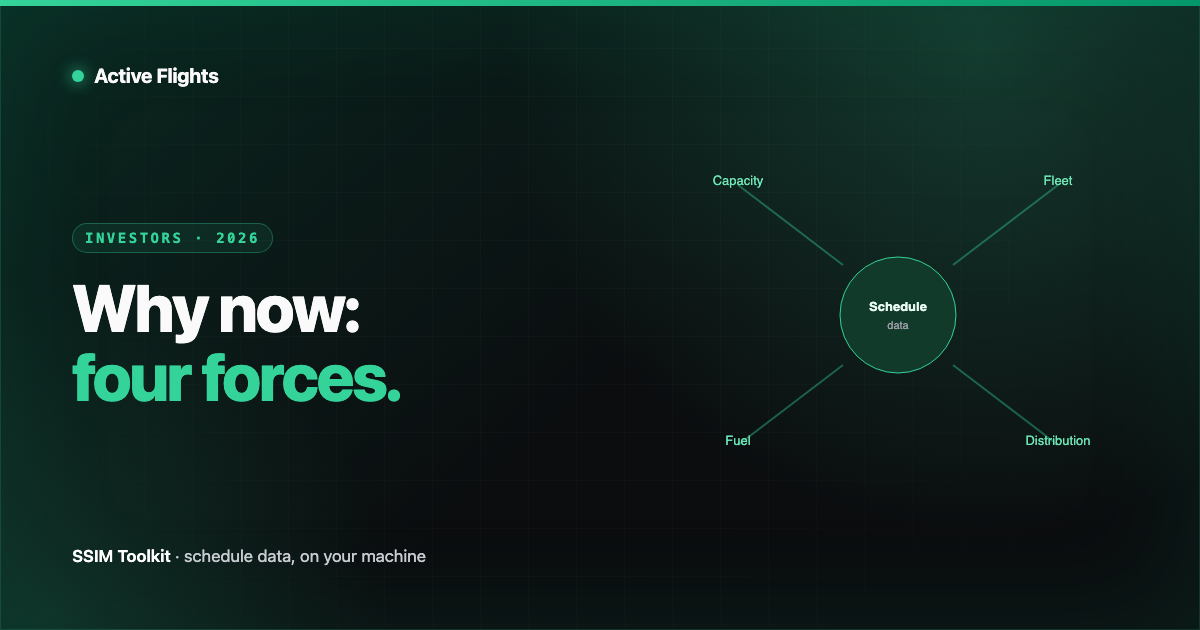
Why now: the 2026 forces converging on schedule data
Capacity discipline, a decade-long fleet backlog, a permanent fuel premium, and a slow distribution overhaul are all landing at once. Each, independently, raises the value of getting schedule data right.
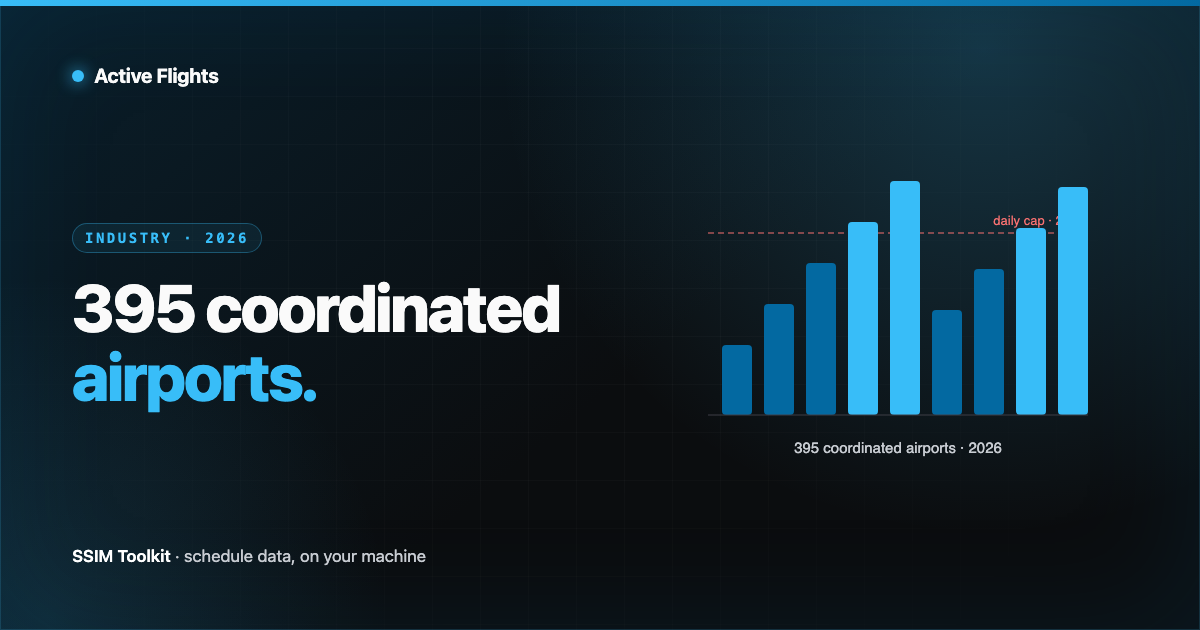
395 coordinated airports: the 2026 slot picture
Nearly 400 airports worldwide restrict who can operate and when in 2026, and around 43% of global departures leave a slot-coordinated field. Here's the 2026 landscape — and why a published schedule and its slot holdings have to agree.