


Why Planes Dump Fuel in Mid-Air (and Why Some Can't)
A jet that just took off with a full tank is too heavy to land. Here's why some aircraft jettison fuel, how it works, and where it goes.
Aircraft turnaround time explained: deboarding, cleaning, catering, fuel, bags and boarding overlap; typical narrowbody and widebody turns, and why it counts.
In 1972, a small Texas airline called Southwest was in trouble. It had posted a net loss of $1.6 million and was forced to sell one of its four Boeing 737s. The problem: the schedule still needed the flying. The answer, from vice president of ground operations Bill Franklin, was the 10-minute turn — unload, reload and push back so fast that the smaller fleet could keep flying the schedule. Southwest posted its first profit the following year (Texas Public Radio / NPR).
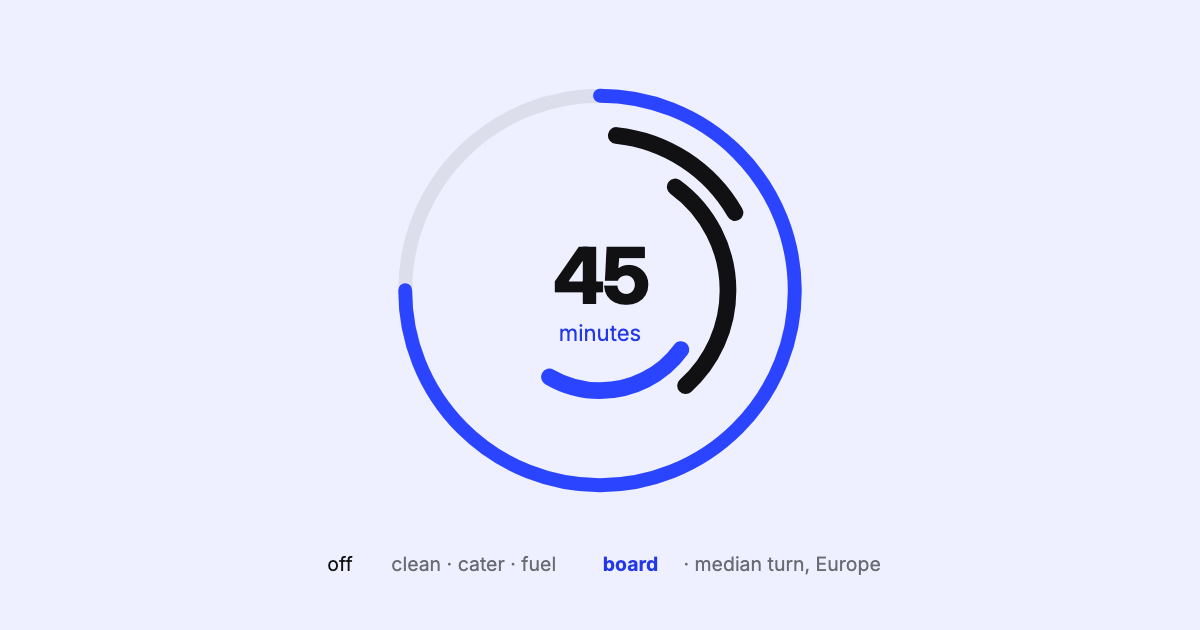
That gap between landing and leaving again is the aircraft turnaround: the time an aircraft spends parked at the gate, from the moment the chocks go in (in-blocks) to the moment they come out for the next flight (off-blocks). In Europe, the median scheduled turn is about 45 minutes for medium-sized aircraft such as single-aisle jets, and about 90 for heavy ones such as widebodies (EUROCONTROL).
Far more than most passengers see from the window. A turn bundles a dozen jobs (Wikipedia: Aircraft ground handling):
The trick is that most of this happens at the same time.
Boeing publishes a planning chart for exactly this. For a 737-800 with 160 passengers, every seat changing hands and all passengers using the front left door, it lays out the turn like this:
Read it top to bottom and you can see the choreography. While passengers are still walking off, the holds are already being emptied and the water tank filled. Once the last passengers are off, cleaners, caterers, the fuel truck and the toilet service are all at work. Boarding starts as the cabin service wraps up — and at 14 minutes it is one of the longest tasks on the chart, second only to servicing the galleys (15). The whole turn, pushback included, comes in just under 40 minutes (Boeing, 737 airport planning document).
Notice the asymmetry in Boeing’s own assumptions: passengers get off at 18 a minute but board at only 12 a minute. Finding a seat and stowing a bag takes longer than leaving — which is why boarding is so slow and why it so often decides when the door closes.
The other assumptions are just as specific. Bags come off at 15 a minute and go on at 10. The fuel truck pumps 2,700 gallons through a single nozzle at 300 gallons a minute. One catering truck serves the galleys, and every seat is full. Change any of those — a second door for boarding, a fuller fuel load for a longer next leg — and the chart reshapes itself.
Boeing is careful to say this is an ideal case for a single aircraft; “varying airline practices and operating circumstances” will change the sequence and the times.
The best real-world figures come from EUROCONTROL, which computes turn times from data airlines supply across Europe and groups aircraft by weight category. Medium covers aircraft between 7 and 136 tonnes — a band that takes in the single-aisle jets — while Heavy is 136 tonnes and up (EUROCONTROL).
In 2022 the median scheduled turn was 45 minutes for medium aircraft and 90 minutes for heavy ones. The spread is wide: the fastest tenth of medium turns were scheduled at 25 minutes or less, the slowest tenth at 80 or more.
And turns run long. In every year from 2018 to 2022, the average actual turn was longer than the average scheduled one — 57 minutes against 50 for medium aircraft in 2019, 131 against 117 for heavy.
Widebodies take longer for obvious reasons: more seats to empty and fill, more meals to load, more bags, more fuel.
An aircraft only earns money in the air. Every minute it sits at a gate is a minute it isn’t flying — which is exactly why Southwest’s shorter turns let a smaller fleet keep its schedule.
The turn is also where delays spread. Each aircraft flies a chain of flights through the day — its rotation — and the scheduled turn is the buffer between them. If an aircraft lands late and the turn can’t absorb it, the next departure leaves late too, and the one after that. It’s the aircraft’s version of a minimum connect time for passengers.
In a published schedule, the turn is the gap between one flight’s arrival and the same aircraft’s next departure. Reading those gaps — where they’re generous and where they’re tight — is one of the things planners do when they explore a schedule in SSIM Toolkit.
Sources
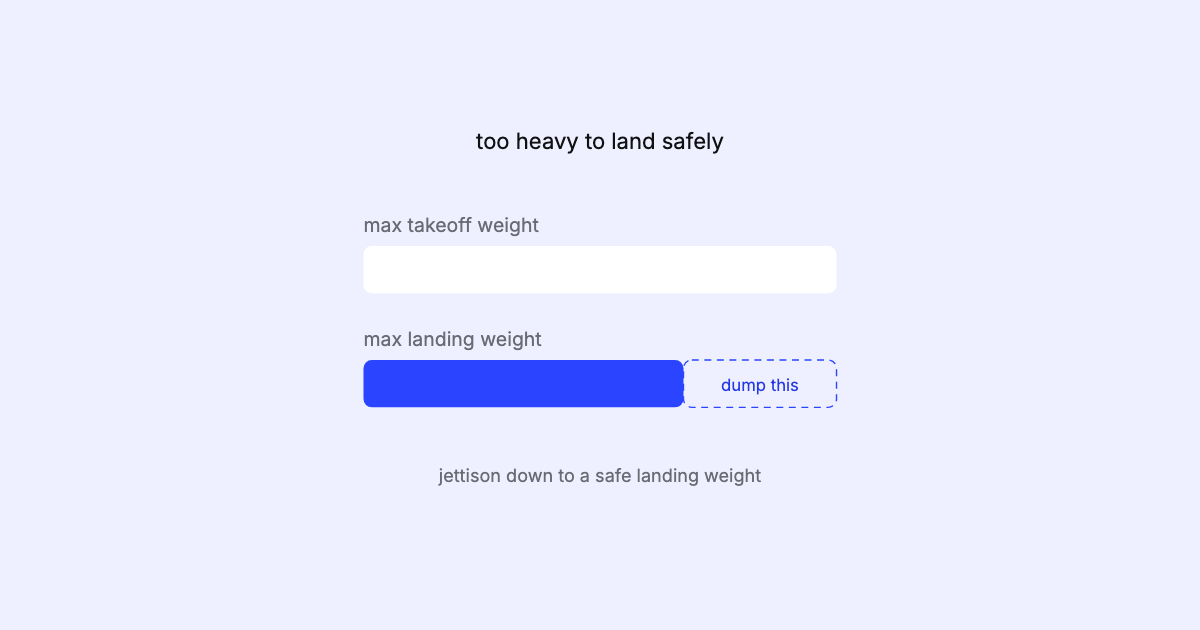
A jet that just took off with a full tank is too heavy to land. Here's why some aircraft jettison fuel, how it works, and where it goes.
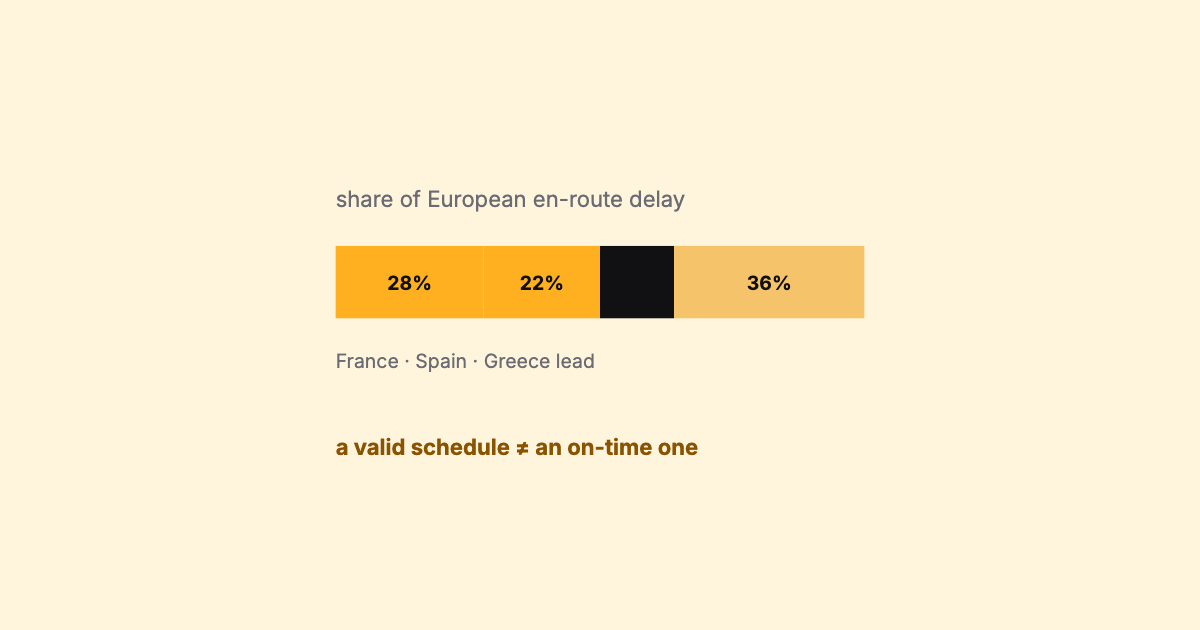
A schedule can be perfectly valid on paper and still not fly on time. Europe's 2026 summer — record traffic against airspace and staffing limits — is a reminder that operational feasibility lives outside the SSIM file.
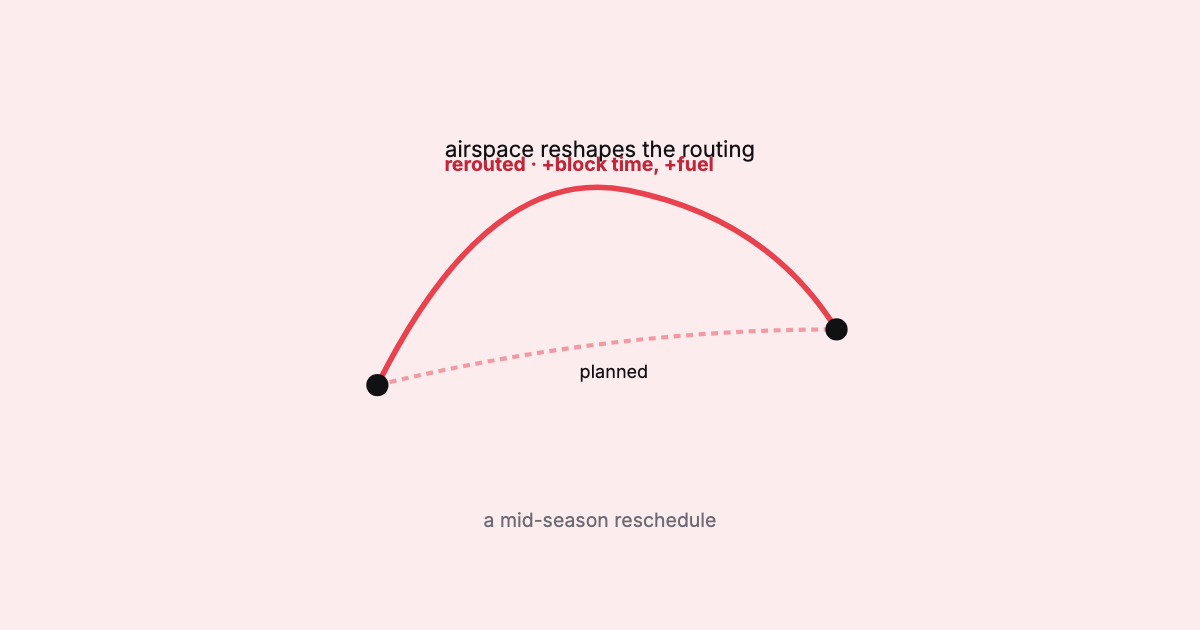
Geopolitics doesn't only move fares — it reroutes flights, stretches block times, and forces schedules to be reissued mid-season. Here's the schedule mechanics of a reroute, and how to read the reissued file.