#ssim
13 articles tagged #ssim.
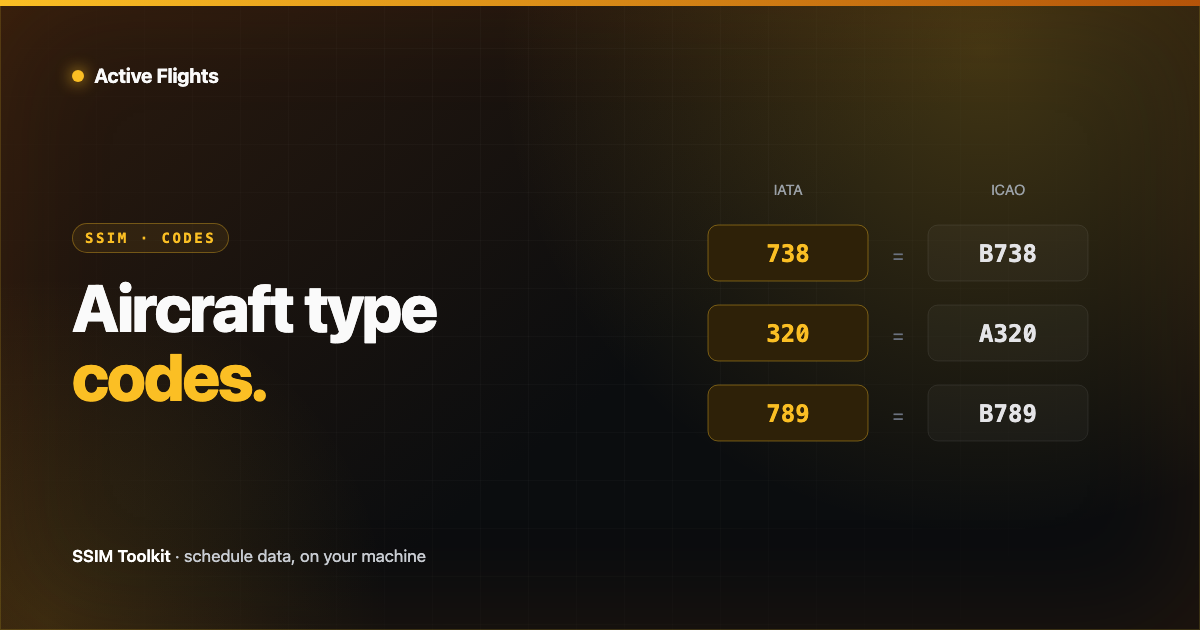
Reading aircraft type codes: IATA vs ICAO in the schedule
The 'equipment' field in a schedule is a short code for an aircraft type — and there are two competing code systems for it. Knowing which is which, and mapping between them, is a small skill that prevents big mistakes.
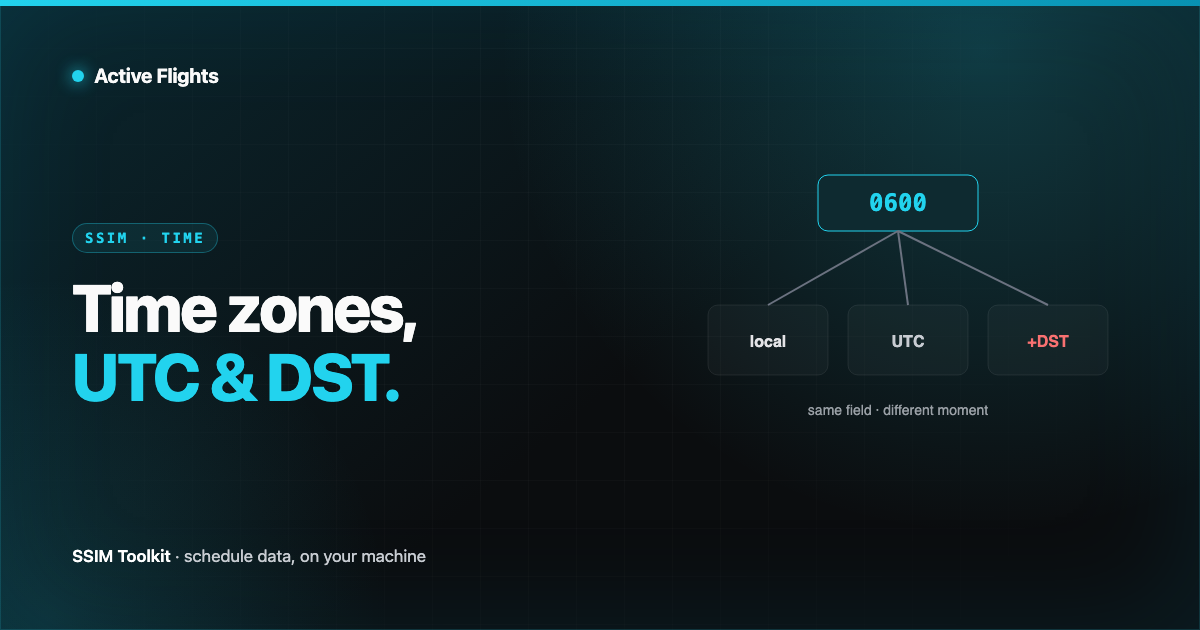
Time zones, UTC and DST: the schedule's quiet minefield
Almost every serious schedule-data bug is, at bottom, a time bug. Local vs UTC, per-station offsets, and daylight-saving transitions turn a simple 'departure time' into one of the trickiest fields in the file.
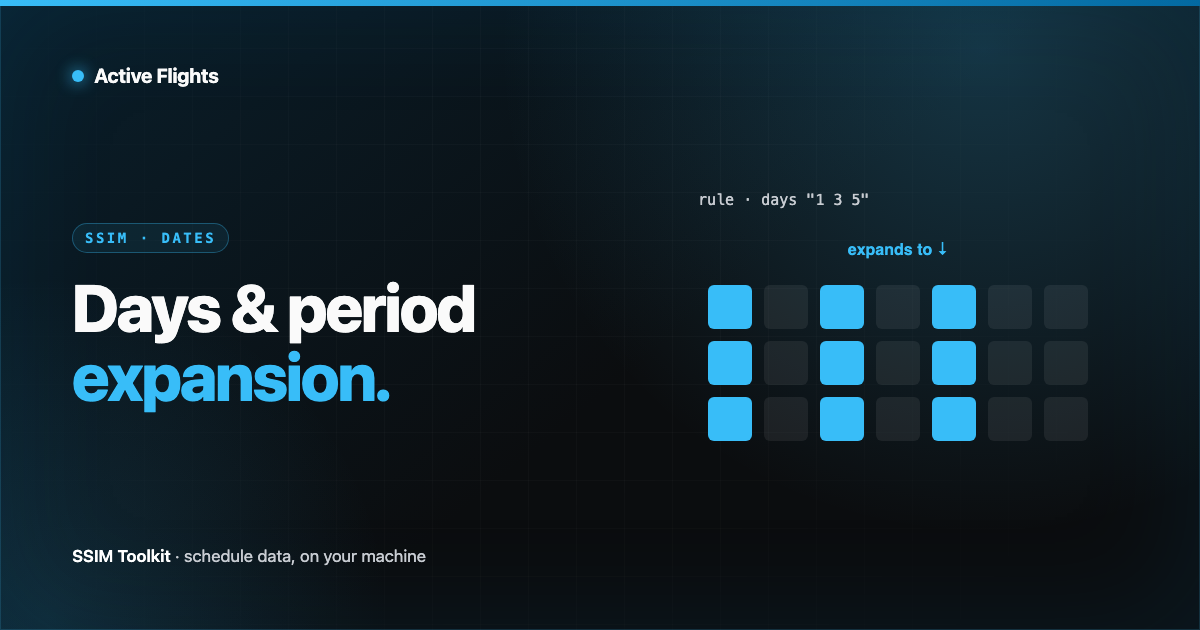
Days of operation and period expansion: the date math that breaks parsers
A single SSIM flight-leg line isn't one flight — it's a rule that expands into many. Getting that expansion exactly right, across days-of-operation, frequency, and season edges, is where a lot of quiet bugs live.
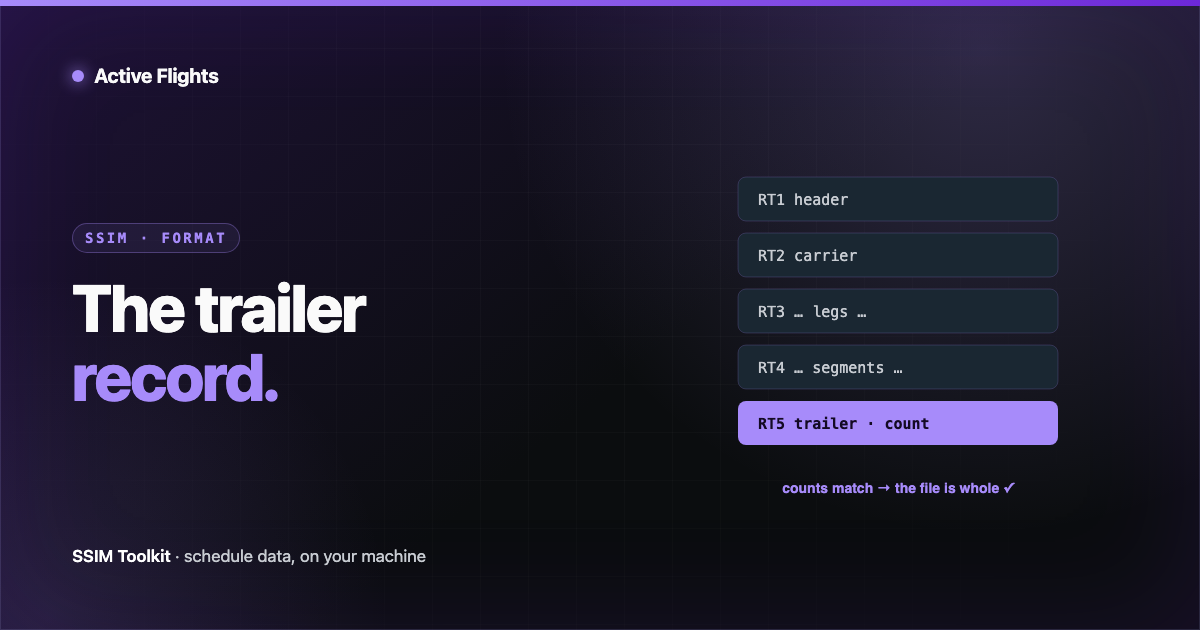
The trailer record: the checksum you shouldn't skip
The last line of an SSIM file — the record type 5 trailer — is easy to ignore, and it's how you know the file arrived whole. Here's what it carries and why checking it is basic hygiene.
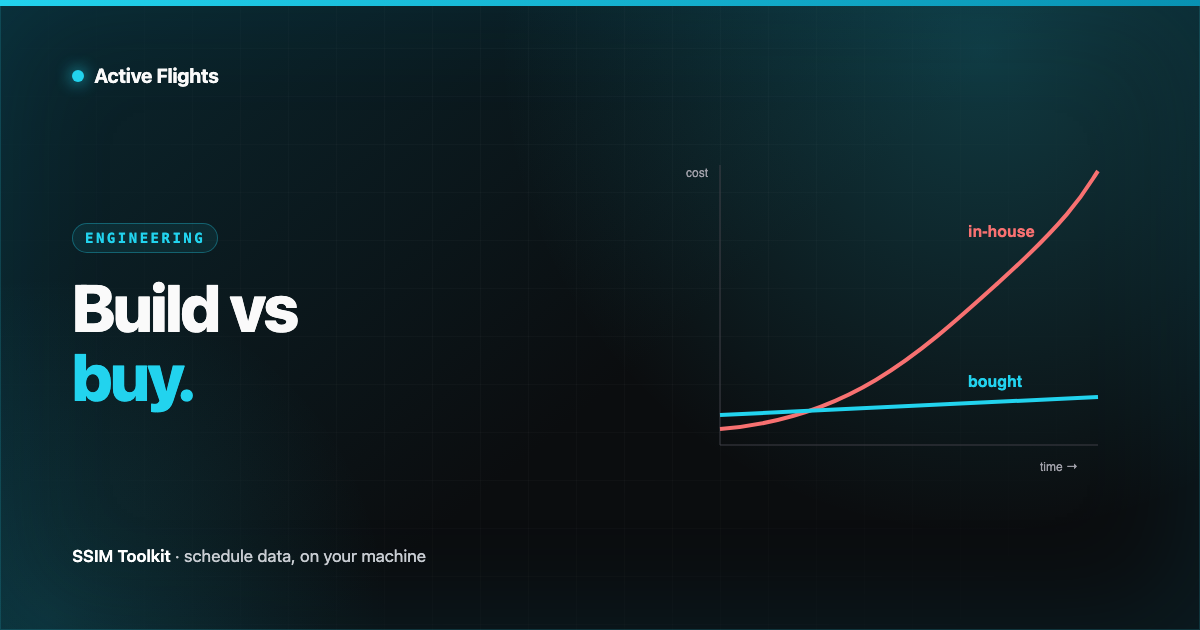
Build vs buy: the true cost of an in-house SSIM parser
Writing your own schedule parser looks cheap — one engineer, a week, done. The real cost is the maintenance treadmill that follows. Here's the total-cost-of-ownership case, honestly.
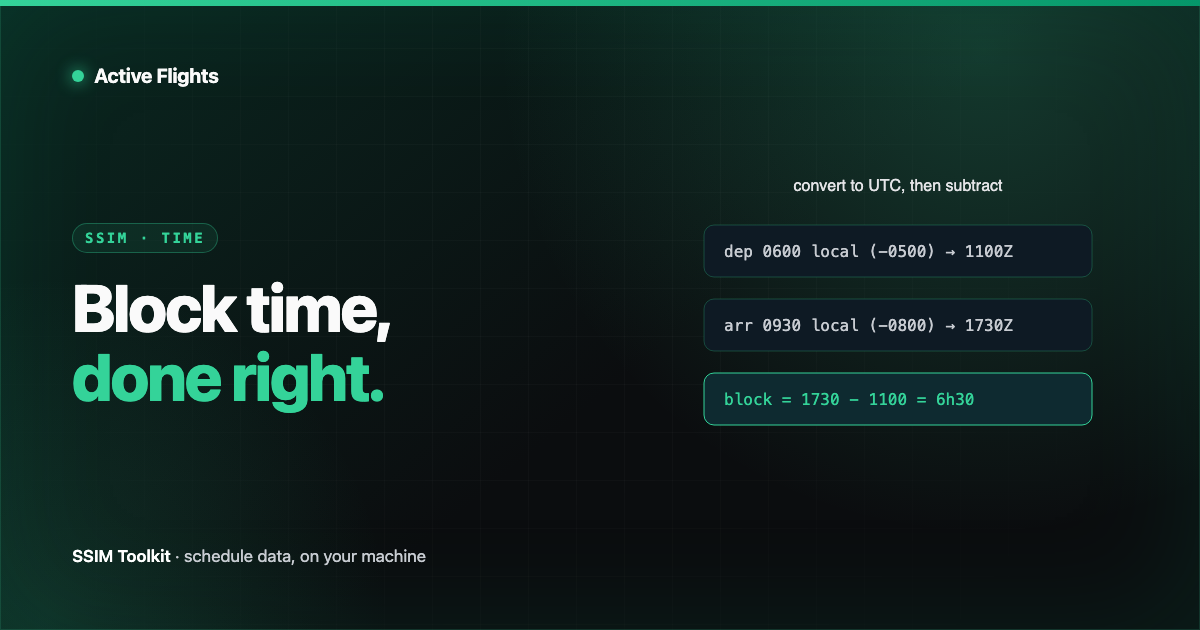
Block time, done right: computing it UTC-correct
Departure and arrival times in a SSIM leg are local. Subtract them directly and a cross-timezone flight looks impossibly short, long, or negative. The correct block time goes through each end's UTC variation — here's the method, with a worked example.
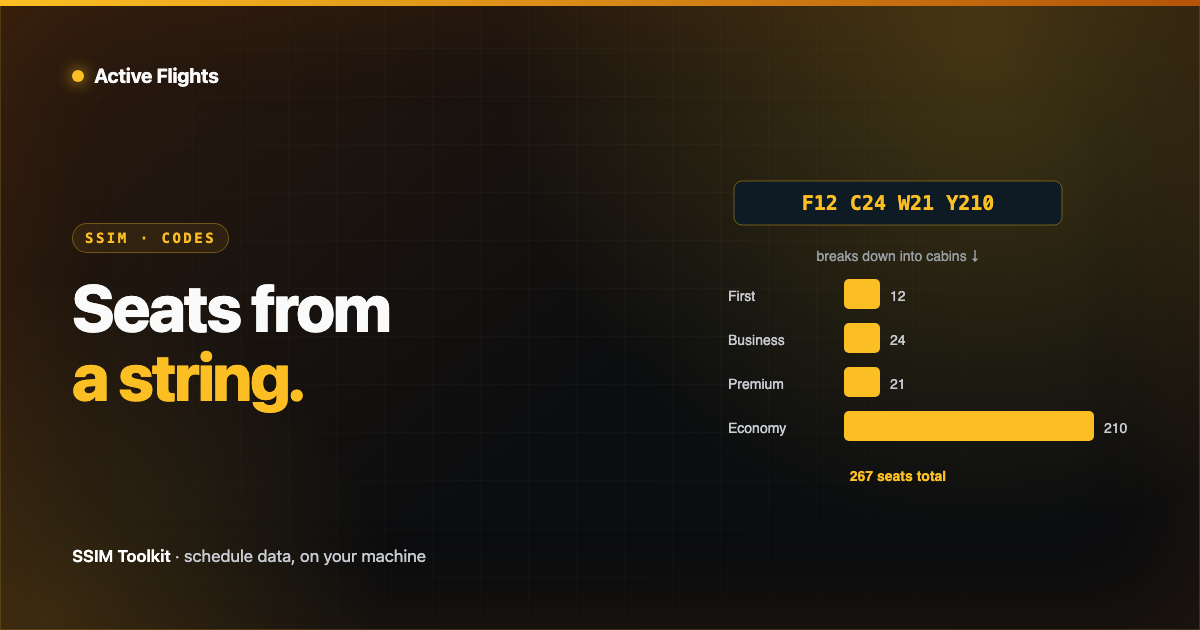
Seats from a string: aircraft configuration in SSIM
SSIM doesn't hand you a seat count. It hands you an aircraft configuration string describing each cabin compartment and its seats — and you derive the capacity from that. Here's how to read it, and why the equipment code isn't the same thing.
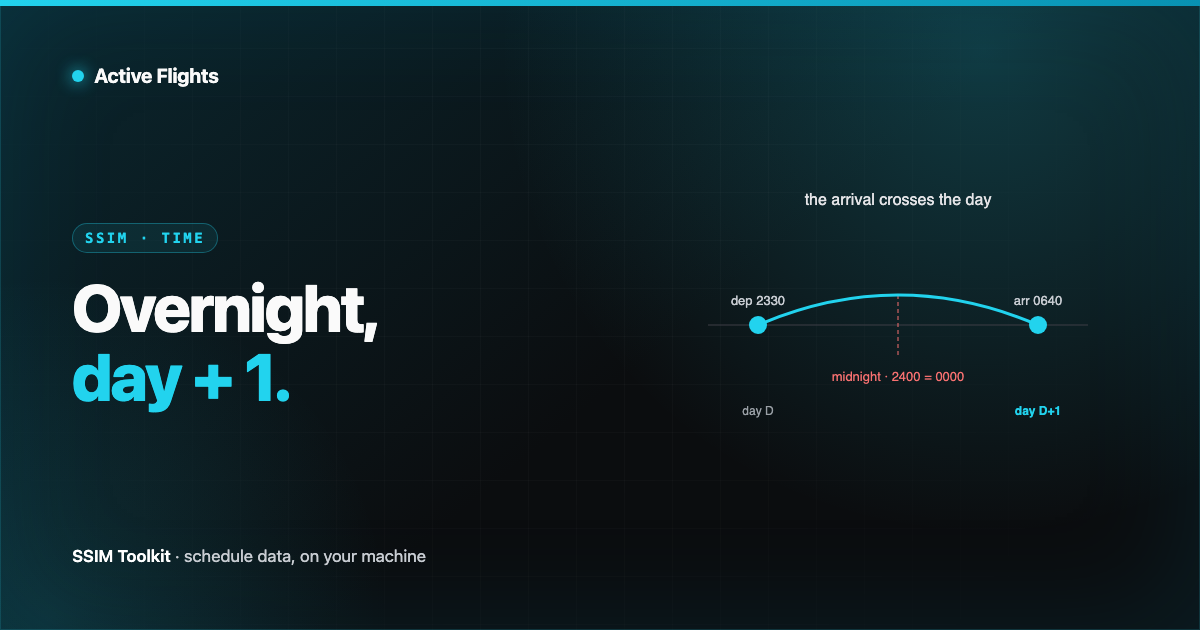
Overnight flights and the day that changes
A red-eye departs one day and lands the next. SSIM encodes that with a day offset — and the 2400-vs-0000 midnight edge — which naive time handling turns into negative block times and arrivals before departure.
The data-quality edge cases that break schedule parsers
A field guide to the real-world quirks in SSIM feeds — time modes, overnight arrivals, DST, operational suffixes, season edges — that turn a 'simple' fixed-width parser into a maintenance treadmill.