#scheduling
13 articles tagged #scheduling.
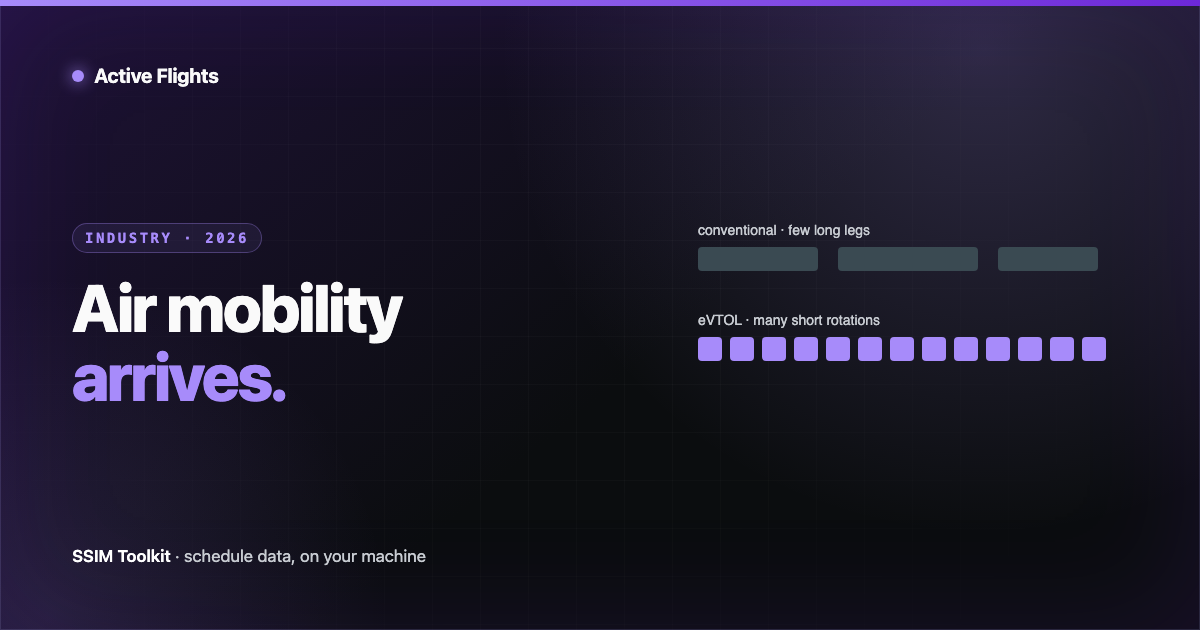
Advanced Air Mobility is coming to the schedule
eVTOL aircraft are moving from concept to the airshow flight line. When electric air taxis start operating at scale, they'll bring a scheduling problem that looks familiar — just faster, denser, and newer.
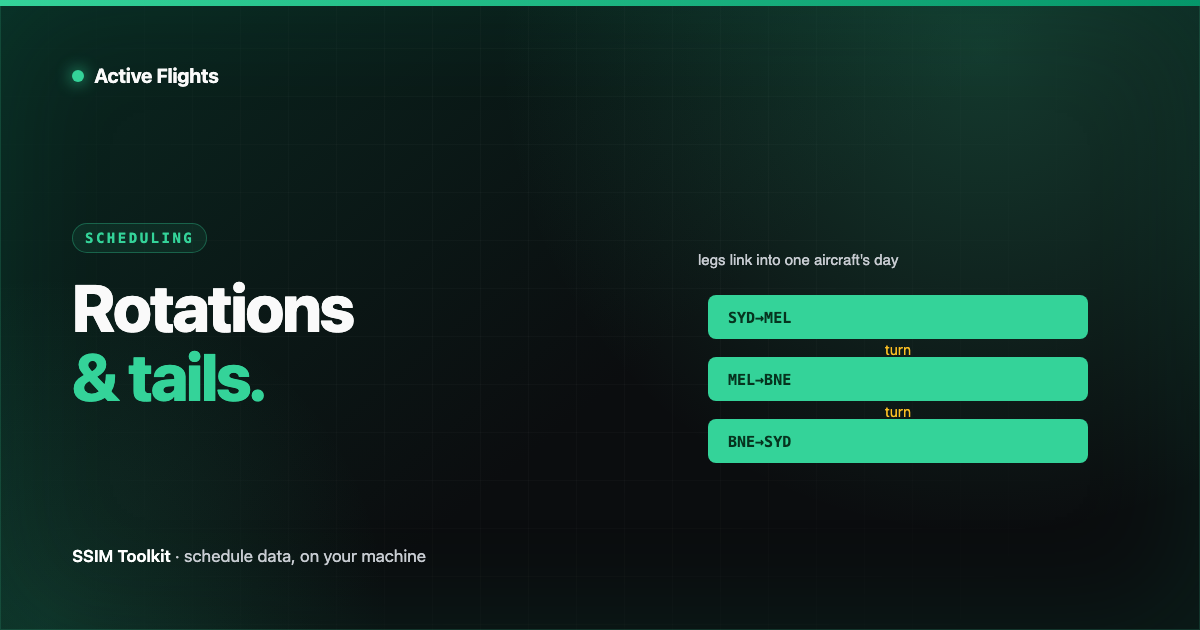
Rotations and tails: how a schedule becomes an aircraft's day
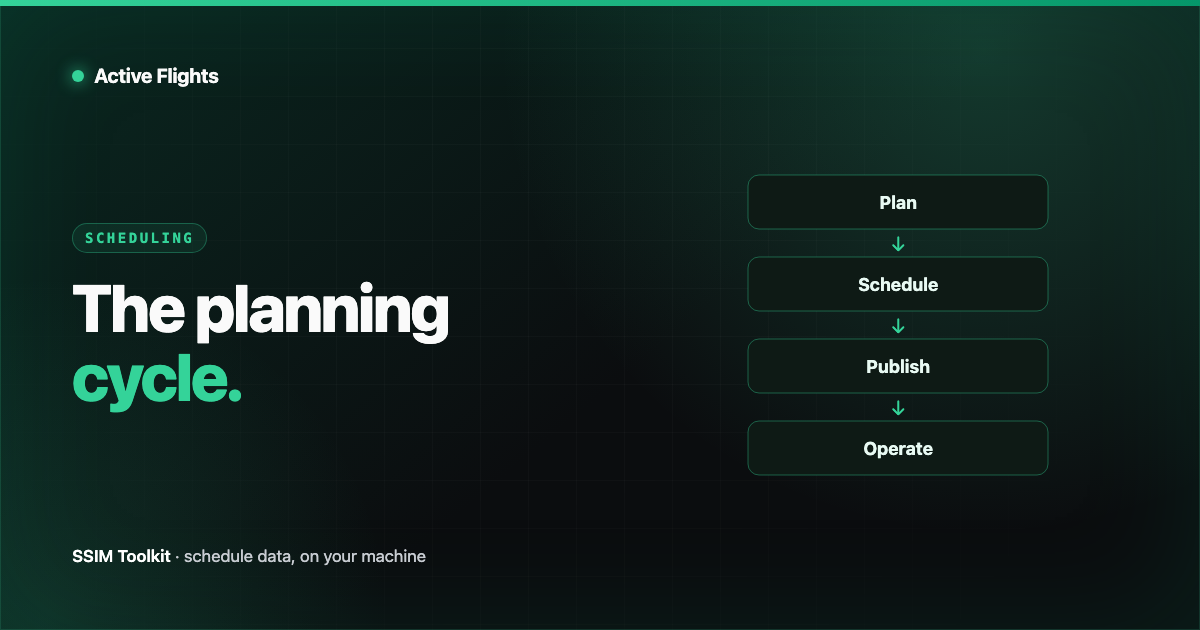
A schedule is a list of flights; an operation is a set of aircraft each flying a connected sequence. Turning one into the other — building rotations and checking they're physically possible — is where the schedule meets reality.
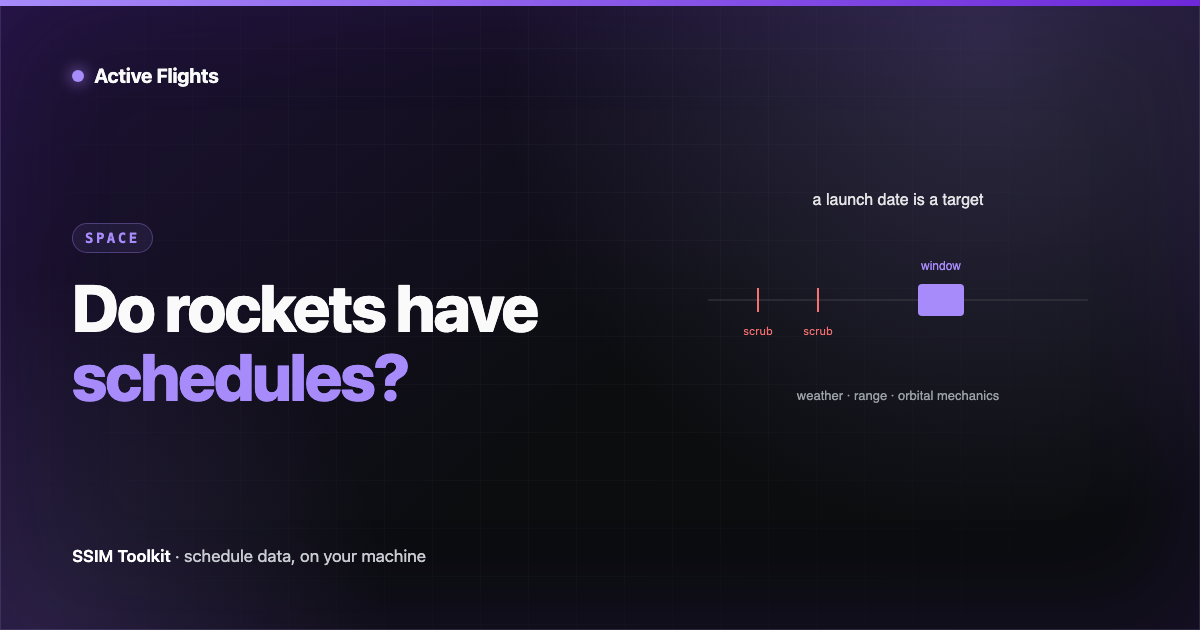
Do Rockets Have Schedules? Inside a Launch Manifest
A launch date is really a target. Here is how launch windows, range congestion, and scrubs shape when a rocket actually flies.

Hub or point-to-point? What the schedule tells you
A carrier's network philosophy is written into its schedule — in the banks at its airports, the degree of its stations, and the shape of its route graph. Here's how to read it.

The OD matrix, explained
An origin–destination matrix turns a wall of flight legs into a picture of where a network flows. Here's how to read one built from a schedule — and, just as importantly, what it can and can't tell you.
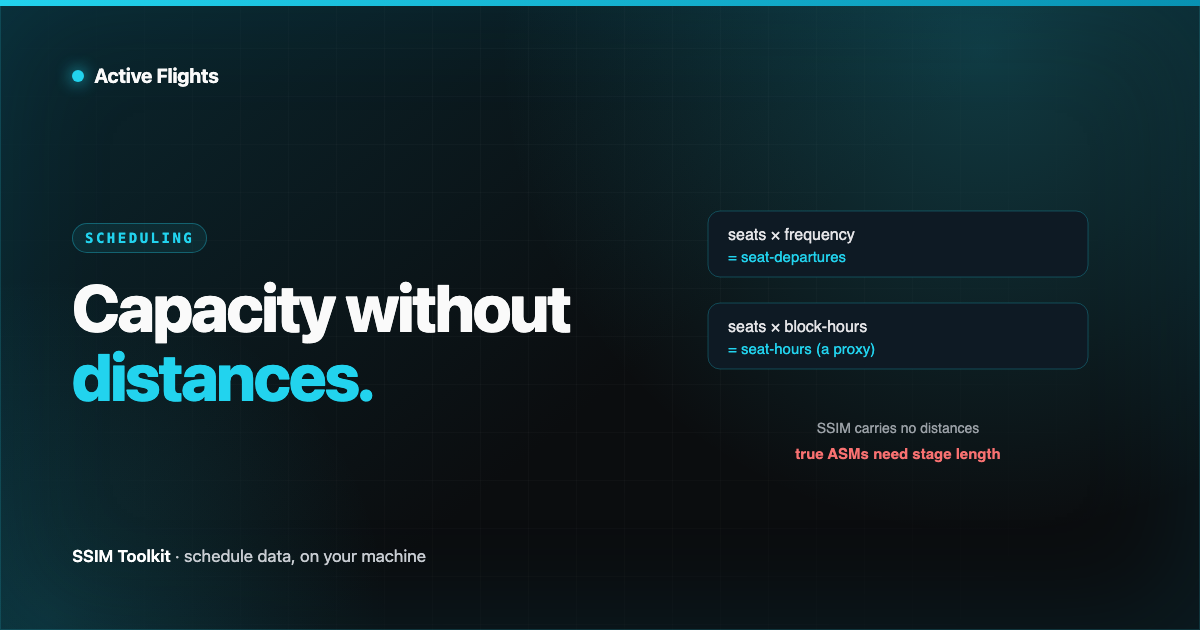
Reading capacity without distances: the ASM proxy
SSIM carries seats and times but no stage lengths, so you can't compute true available seat-miles from the file alone. Here's what you can honestly measure — and where the proxy ends.
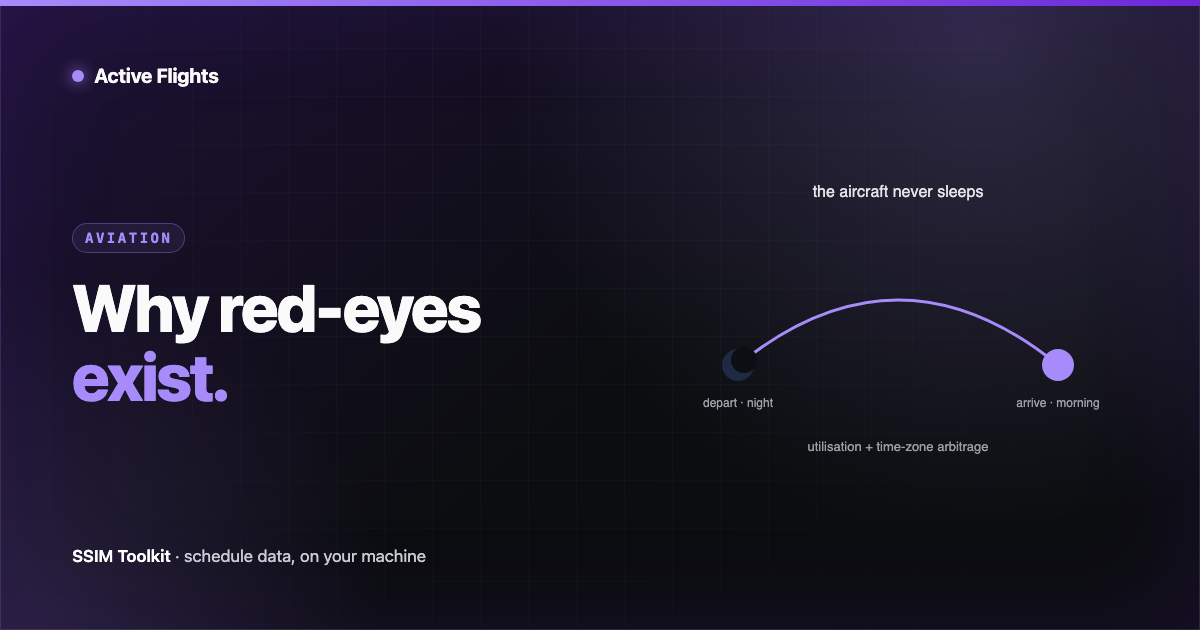
Why Red-Eye Flights Exist (It's Not to Torture You)
Overnight flights feel like a punishment, but they're a finely tuned piece of airline economics. Here's the real reason your plane leaves at 11pm.
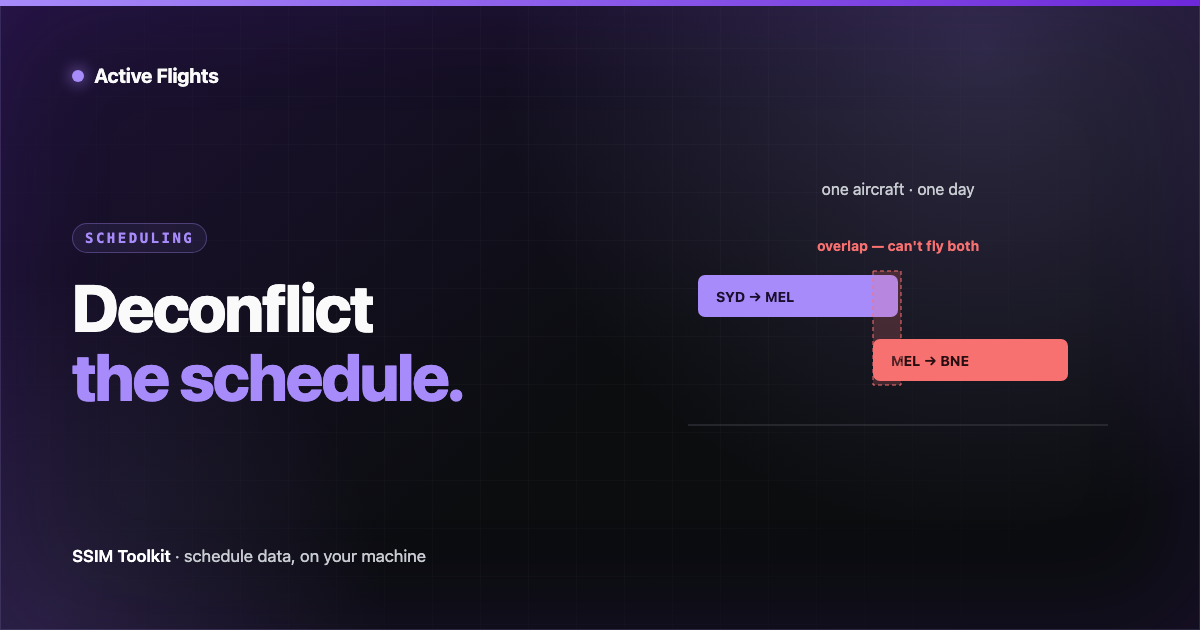
Deconfliction: catching overlapping flights before they bite
A schedule can look perfect and still be impossible — an aircraft in two places at once, a turnaround that can't be made. Deconfliction is finding those conflicts at the desk instead of at the gate.
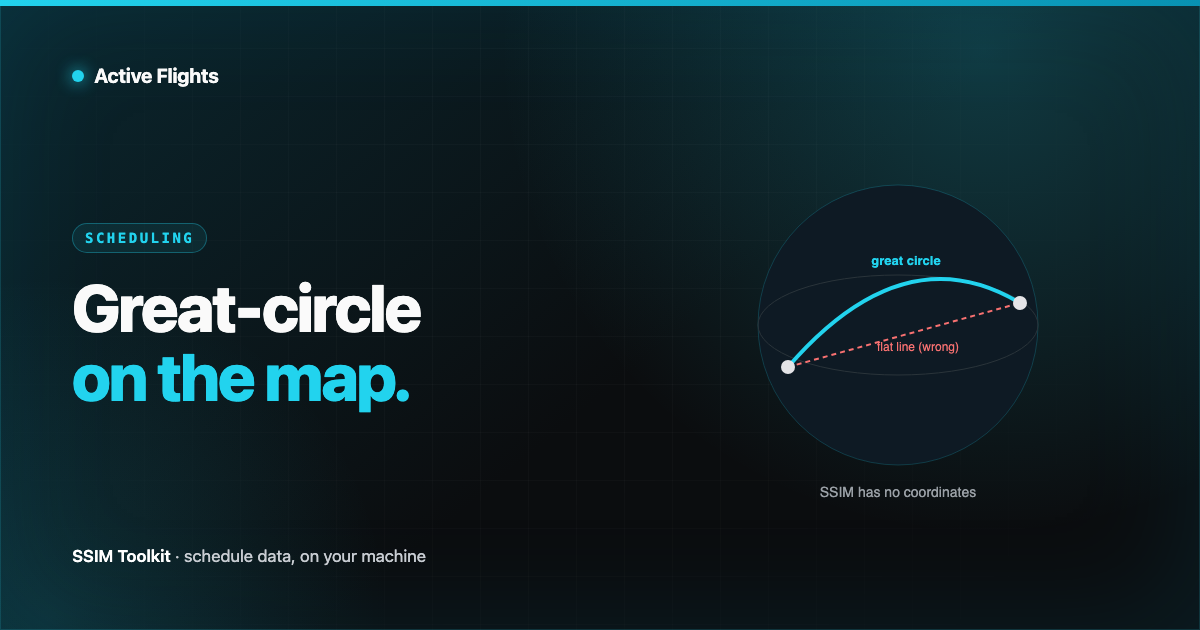
Great-circle distance and the route map
SSIM names the city pair but not where the airports are or how far apart they sit. To map a network or estimate a stage length you bring your own geography and compute the great-circle distance.