
#investors
8 articles tagged #investors.
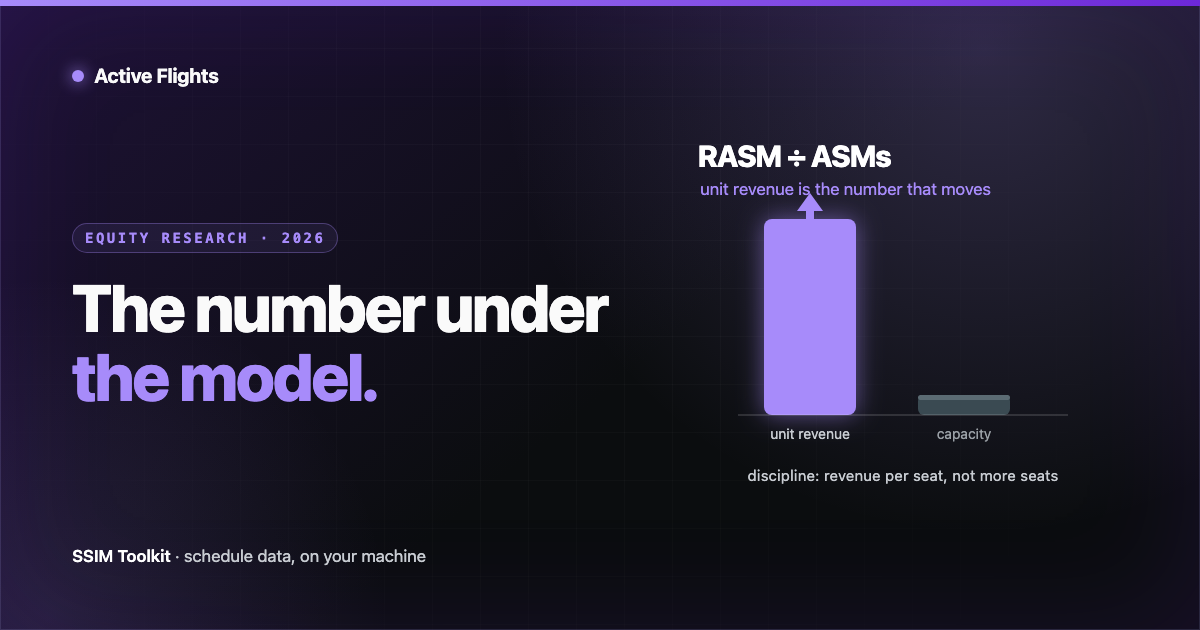
The unit economics of an airline: what equity researchers model — and where the number comes from
Airline stocks turn on unit revenue and unit cost — RASM and CASM per available seat mile. In 2026, carriers are posting double-digit RASM growth on ~1% more capacity. The denominator under every one of those metrics is the schedule.
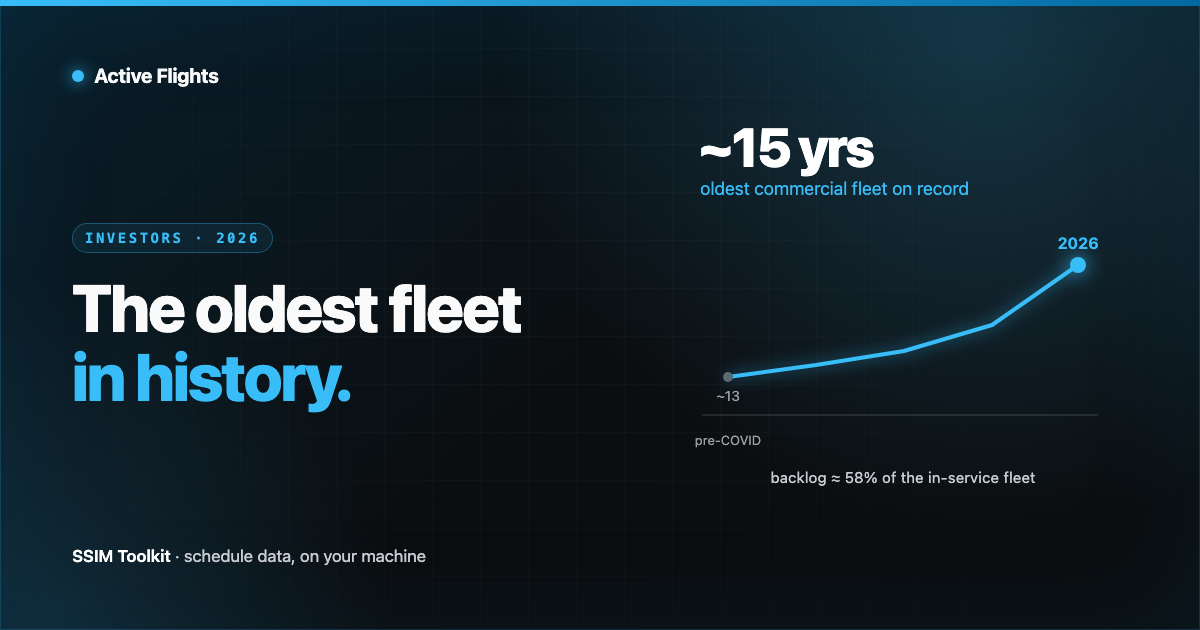
The oldest fleet in history: why aircraft won't retire — and where the value goes instead
While Farnborough fills with orders for jets that arrive in the 2030s, the global fleet has quietly aged to a record ~15 years. Retirements are deferred, the installed base is where the money is, and the schedule is where an aging fleet is won or lost.
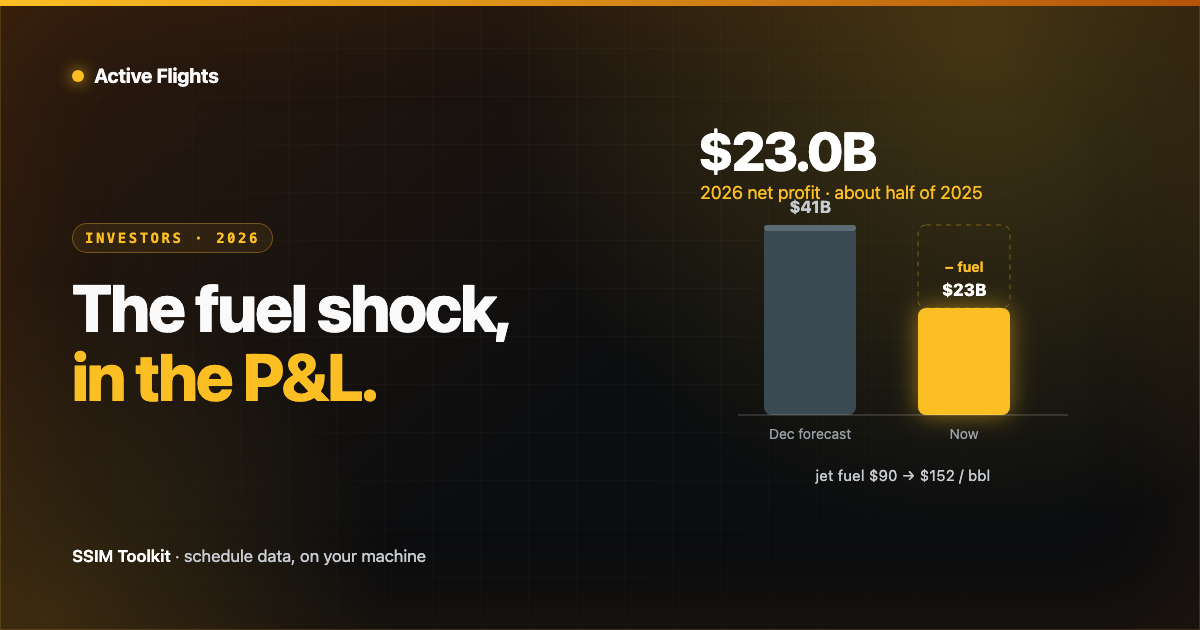
The 2026 fuel shock: airline profits halve, and the schedule becomes the margin defense
IATA now sees 2026 industry net profit at $23B — roughly half of last year — as jet fuel jumps from $90 to $152 a barrel. Demand is still strong and carriers are beating estimates. For investors, the gap between the two is the whole story.
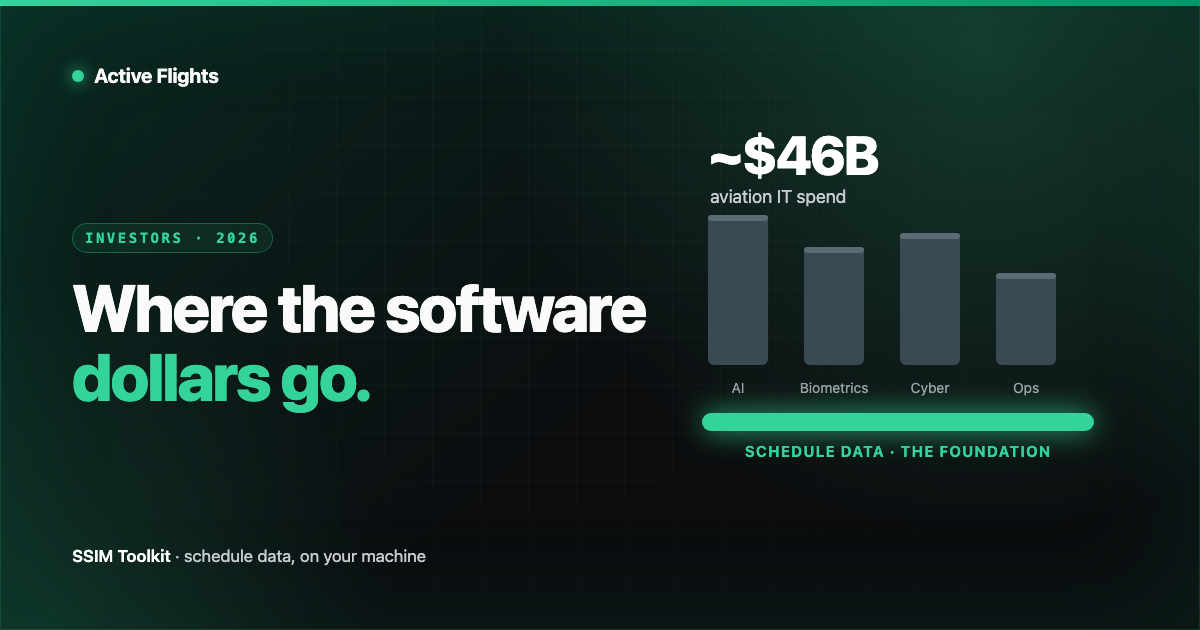
Where aviation's software dollars go in 2026 — and the foundation underneath them
Airlines and airports are set to spend around $46B on IT, with AI everywhere. Almost none of it targets the schedule-data layer every operation runs on. For investors, that gap is the interesting part.

An investor's map of aviation schedule tooling
A foundational layer, a durable standard, a recurring need — and almost everyone still building it in-house. Here's the investor's-eye view of schedule-data tooling: the buyers, the wedge, the moats, and the honest risks.
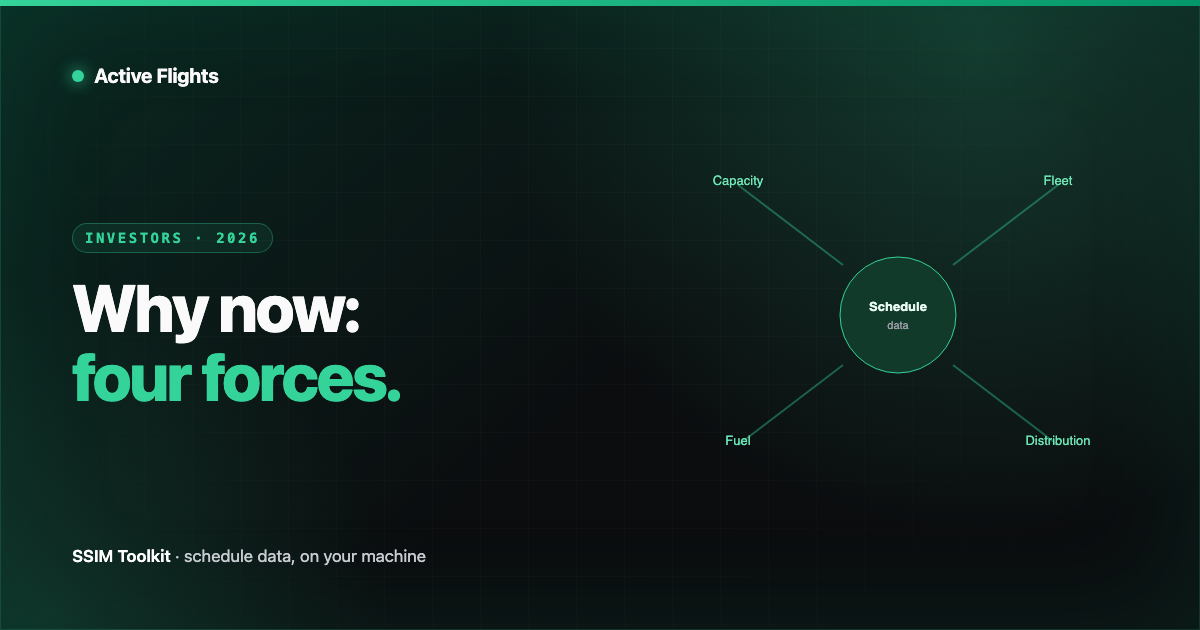
Why now: the 2026 forces converging on schedule data
Capacity discipline, a decade-long fleet backlog, a permanent fuel premium, and a slow distribution overhaul are all landing at once. Each, independently, raises the value of getting schedule data right.
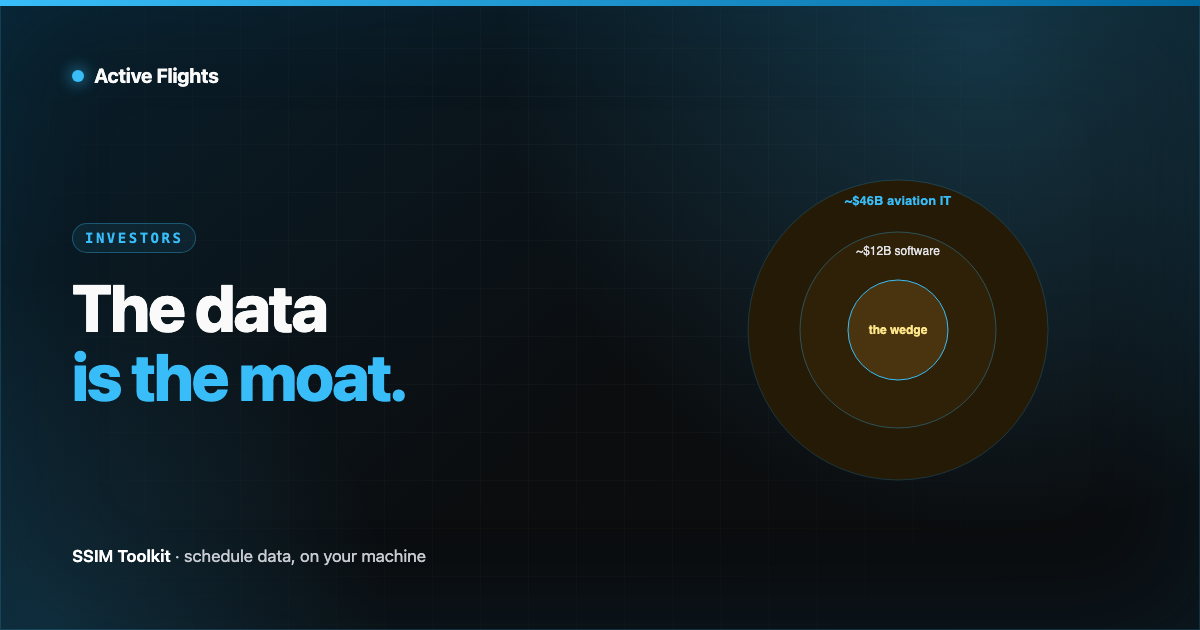
Why the data foundation is the moat
In a foundational data tool, the defensibility isn't the interface — it's the domain encoded into the data layer, the trust that comes from determinism, and the gravity of being the thing everything else is built on.
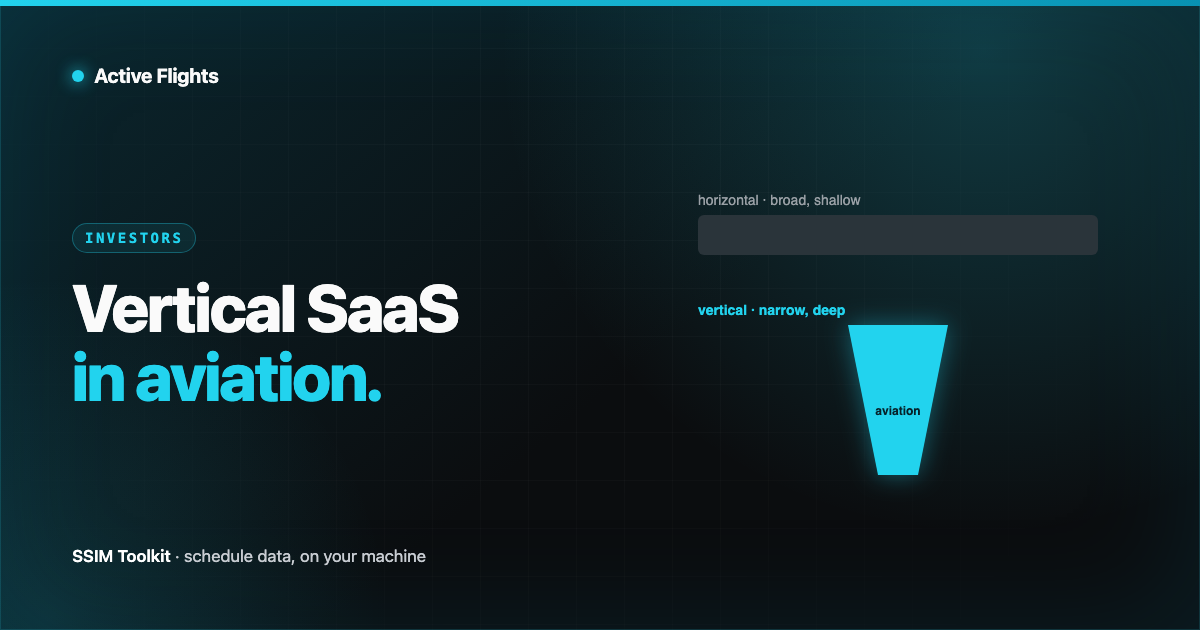
The case for vertical SaaS in aviation
Horizontal software is a knife fight. The durable value increasingly sits in vertical SaaS — deep, domain-specific tools for industries with real complexity. Aviation, and its schedule-data layer in particular, is a textbook example.