
Schedule data, in the open.
Where airline schedule data is headed, why the industry's tooling is ripe for a reset, and notes from building SSIM Toolkit.
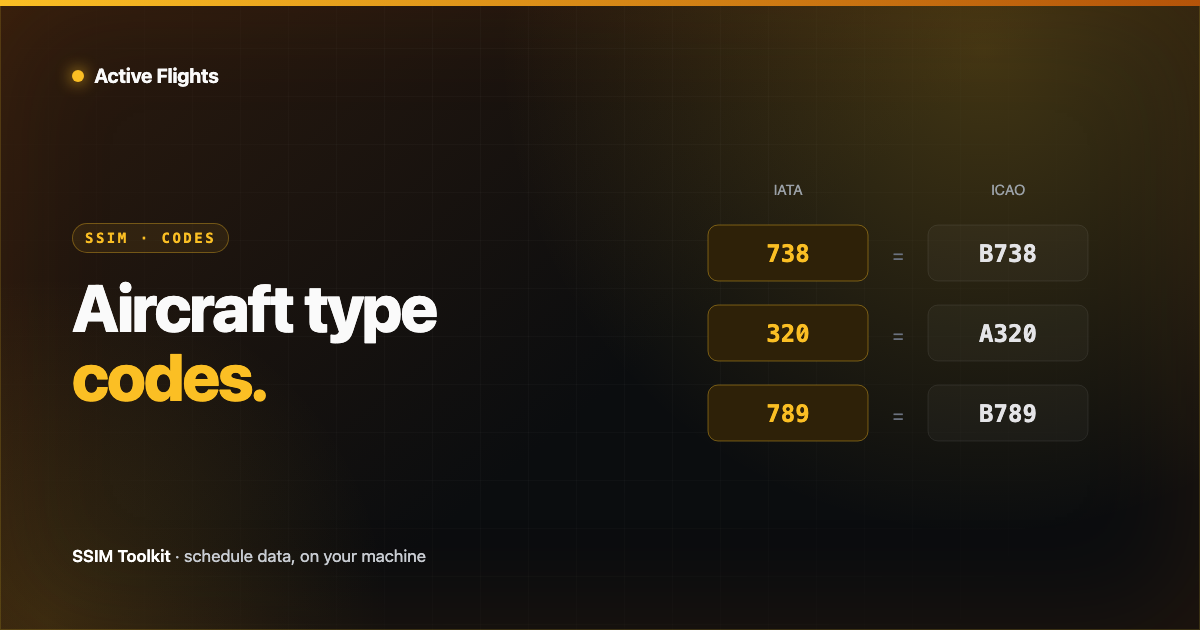
Reading aircraft type codes: IATA vs ICAO in the schedule
The 'equipment' field in a schedule is a short code for an aircraft type — and there are two competing code systems for it. Knowing which is which, and mapping between them, is a small skill that prevents big mistakes.
Read article →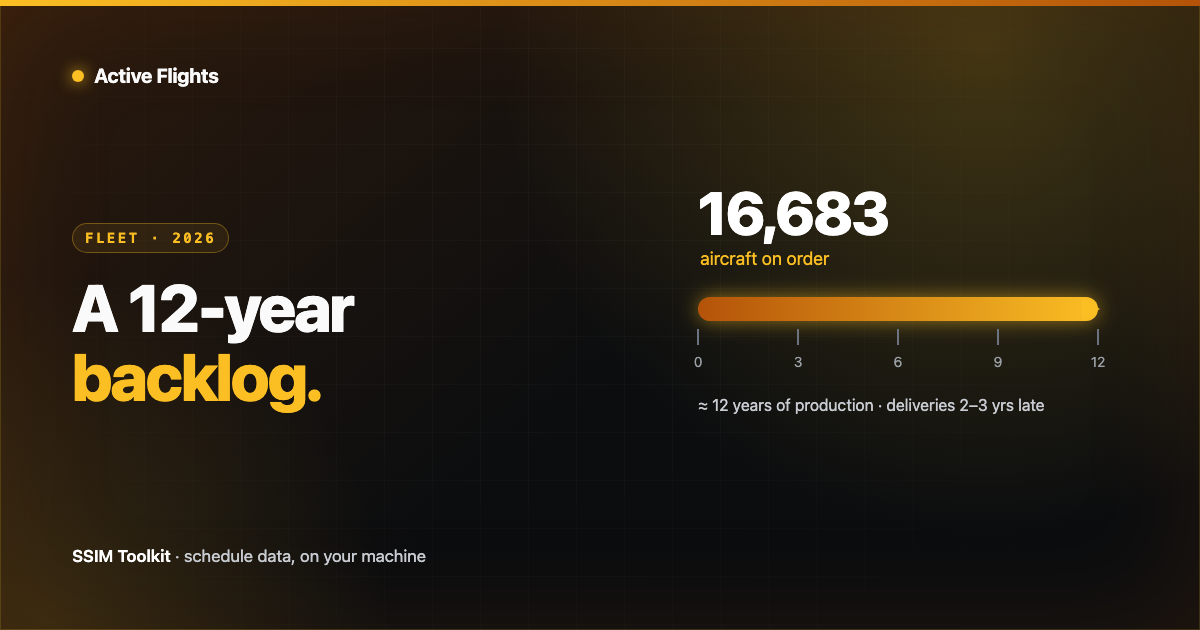
A 12-year backlog: how the aircraft delivery crunch is quietly rewriting airline schedules
Order books stretch past 16,000 aircraft and deliveries run years late. When the fleet plan can't be trusted, the schedule becomes a moving target — and schedule agility becomes a competitive asset.
Read article →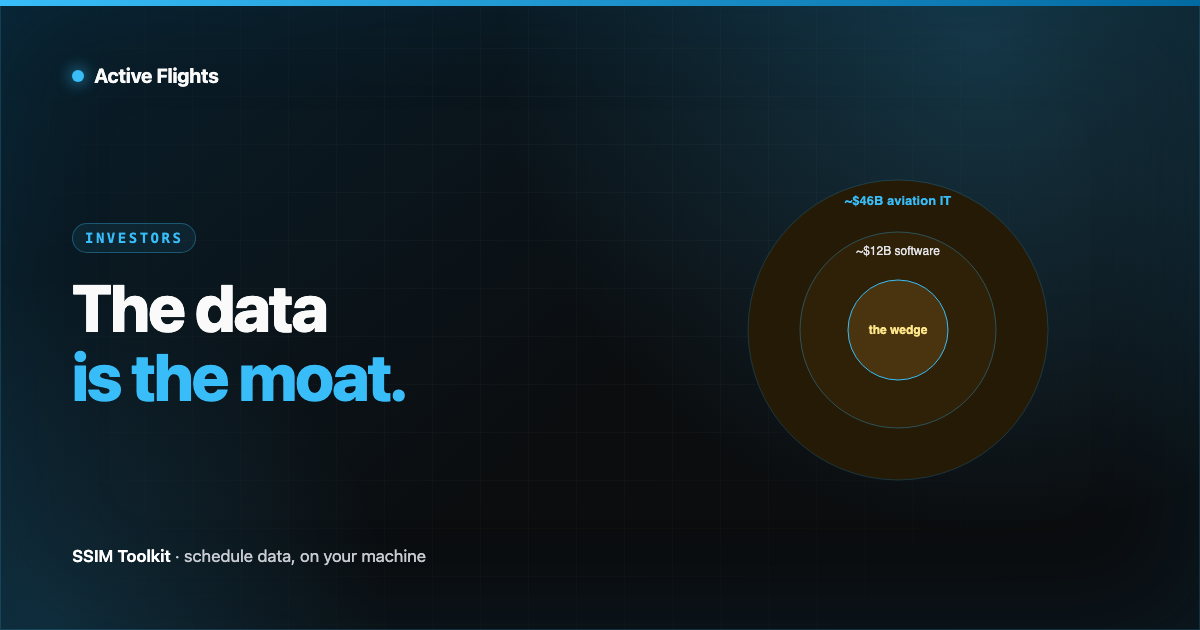
Why the data foundation is the moat
In a foundational data tool, the defensibility isn't the interface — it's the domain encoded into the data layer, the trust that comes from determinism, and the gravity of being the thing everything else is built on.
Read article →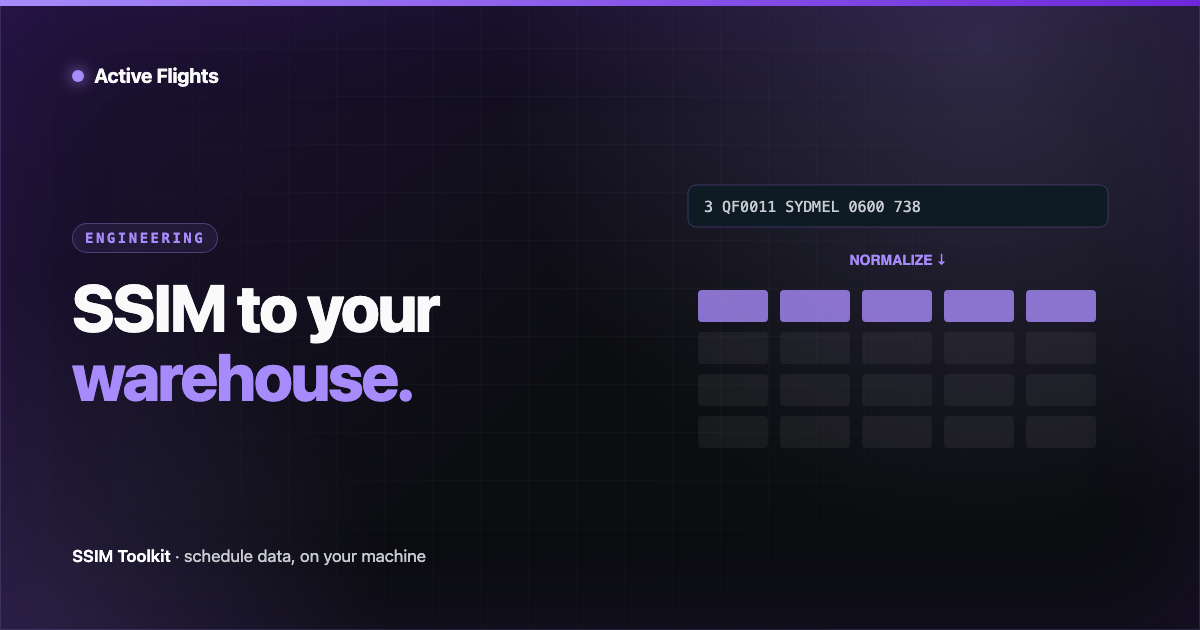
From SSIM to your warehouse: normalizing schedule data for analytics
A fixed-width schedule file and an analytics warehouse want very different shapes. Getting from one to the other — typed, normalized, partitioned, columnar — is the unglamorous work that makes schedule data queryable at scale.
Read article →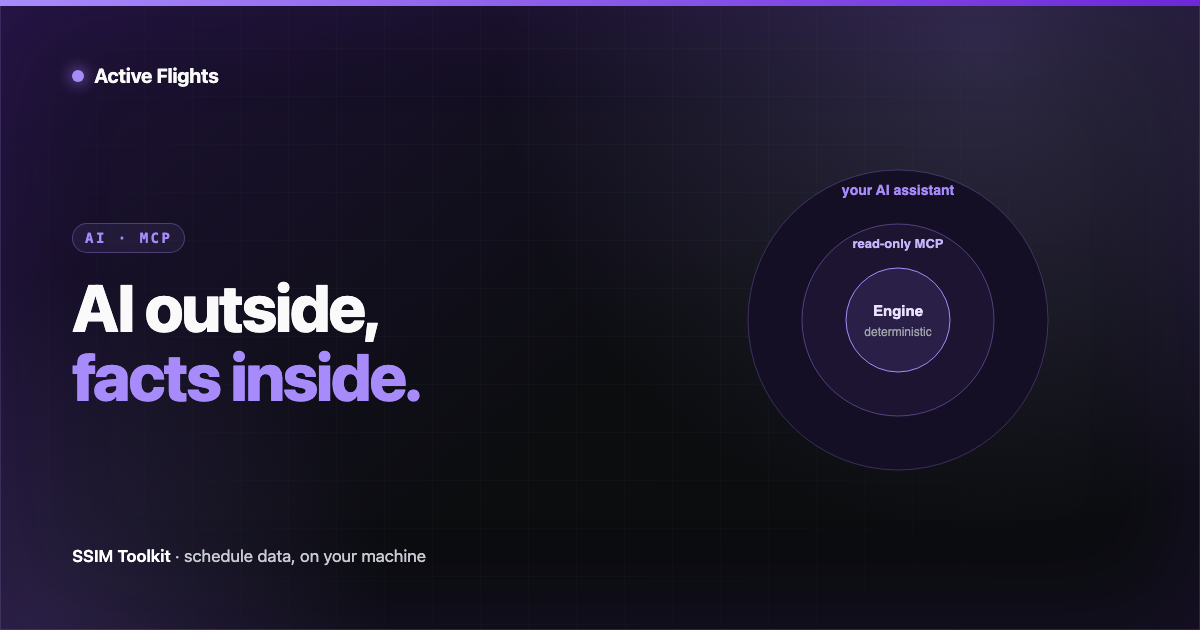
AI on the outside, determinism on the inside
Almost every airline is investing in AI — but you don't want a model guessing your schedule numbers. The right architecture puts a deterministic engine at the core and AI on the outside, via an open standard called MCP.
Read article →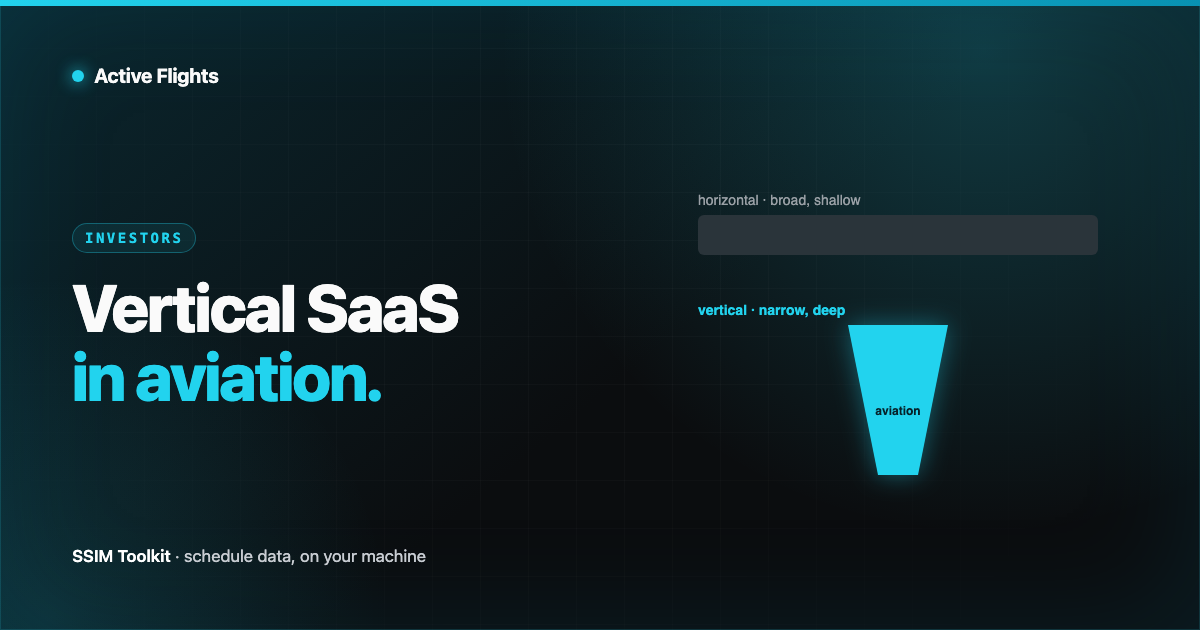
The case for vertical SaaS in aviation
Horizontal software is a knife fight. The durable value increasingly sits in vertical SaaS — deep, domain-specific tools for industries with real complexity. Aviation, and its schedule-data layer in particular, is a textbook example.
Read article →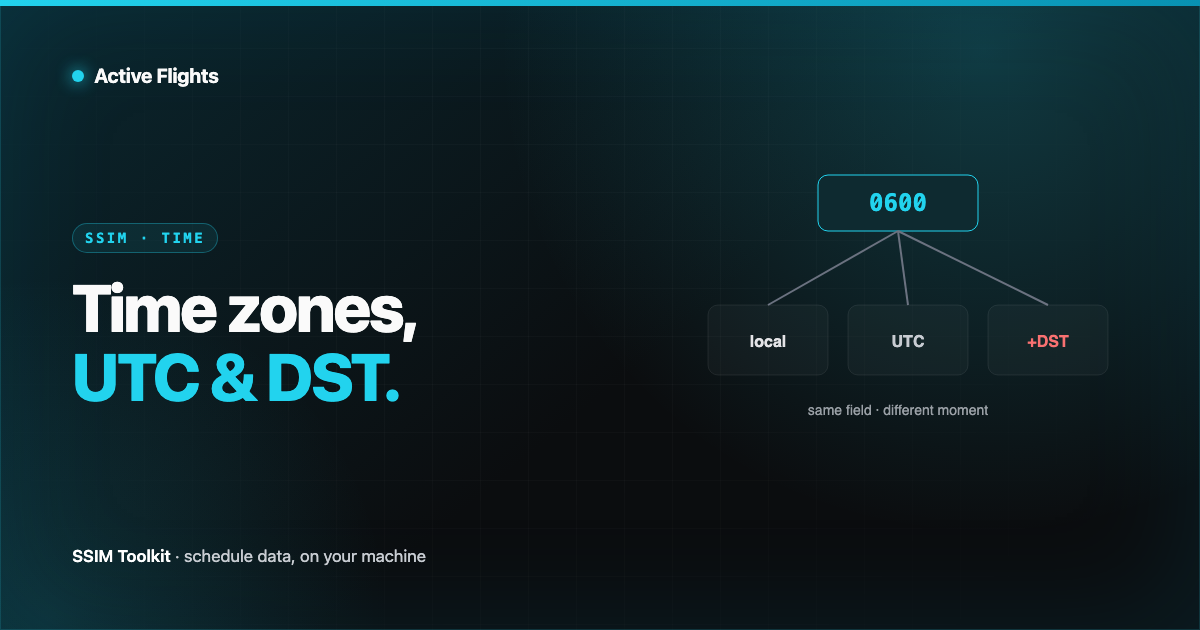
Time zones, UTC and DST: the schedule's quiet minefield
Almost every serious schedule-data bug is, at bottom, a time bug. Local vs UTC, per-station offsets, and daylight-saving transitions turn a simple 'departure time' into one of the trickiest fields in the file.
Read article →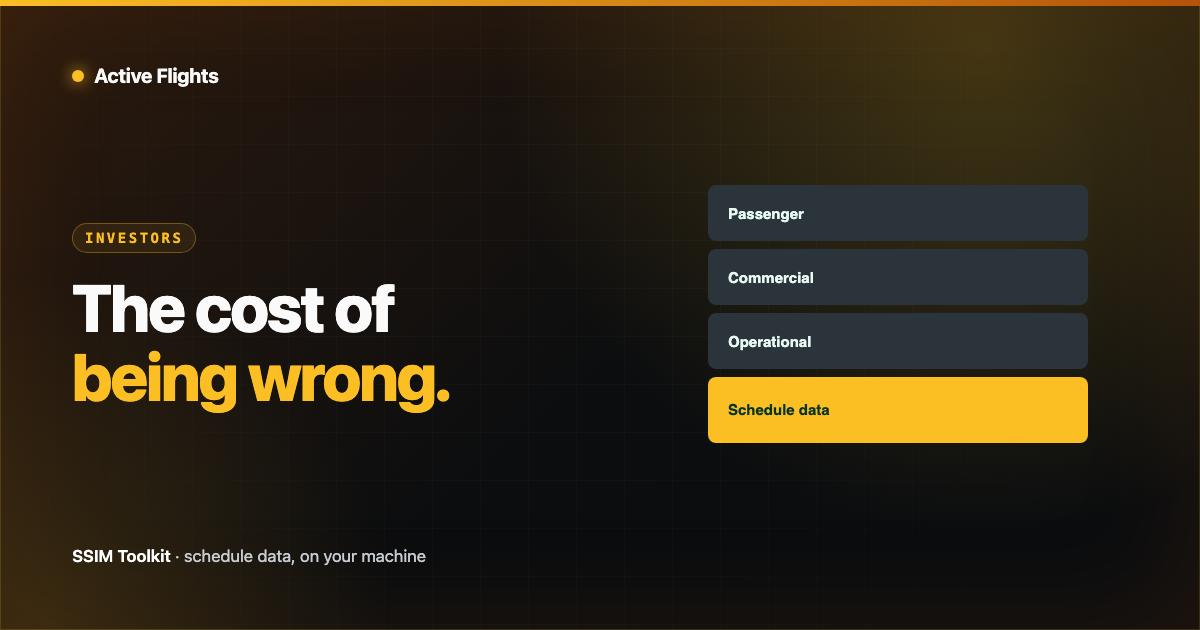
The cost of getting the schedule wrong
A schedule error is cheap to fix at the desk and expensive everywhere else. Because the schedule sits at the bottom of the stack, one wrong row propagates upward — into revenue, operations, and every automated system that trusted it.
Read article →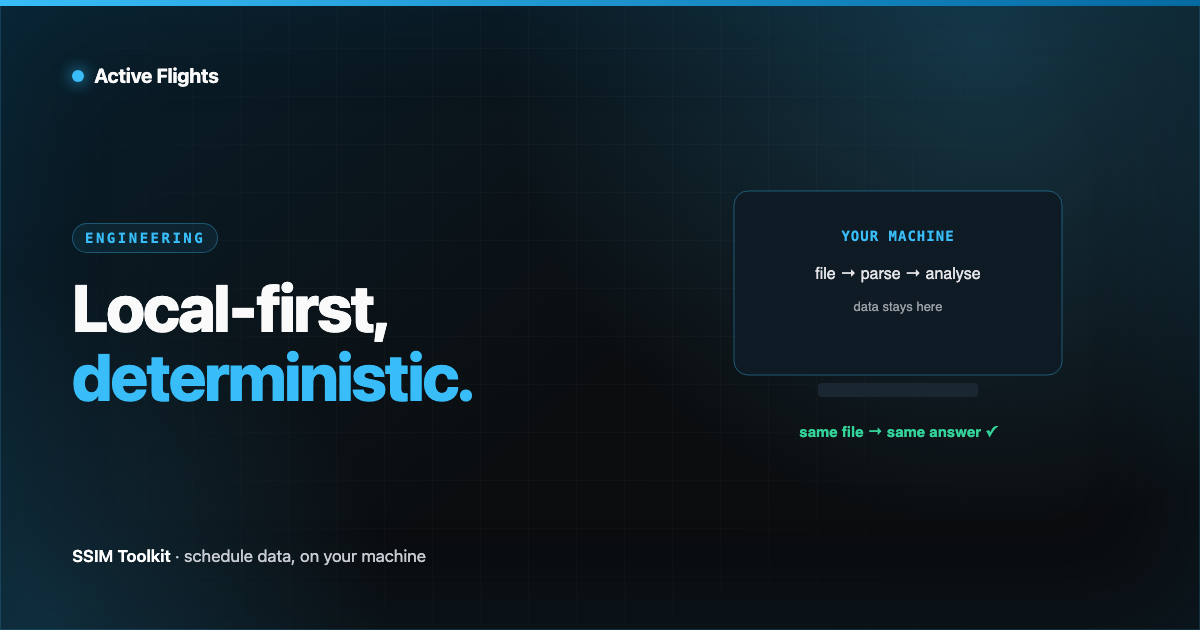
Why local-first, deterministic tooling matters for schedule data
Two properties do most of the work in trustworthy schedule tooling: the data stays on your machine, and the same file always produces the same answer. Here's why both matter more than they sound.
Read article →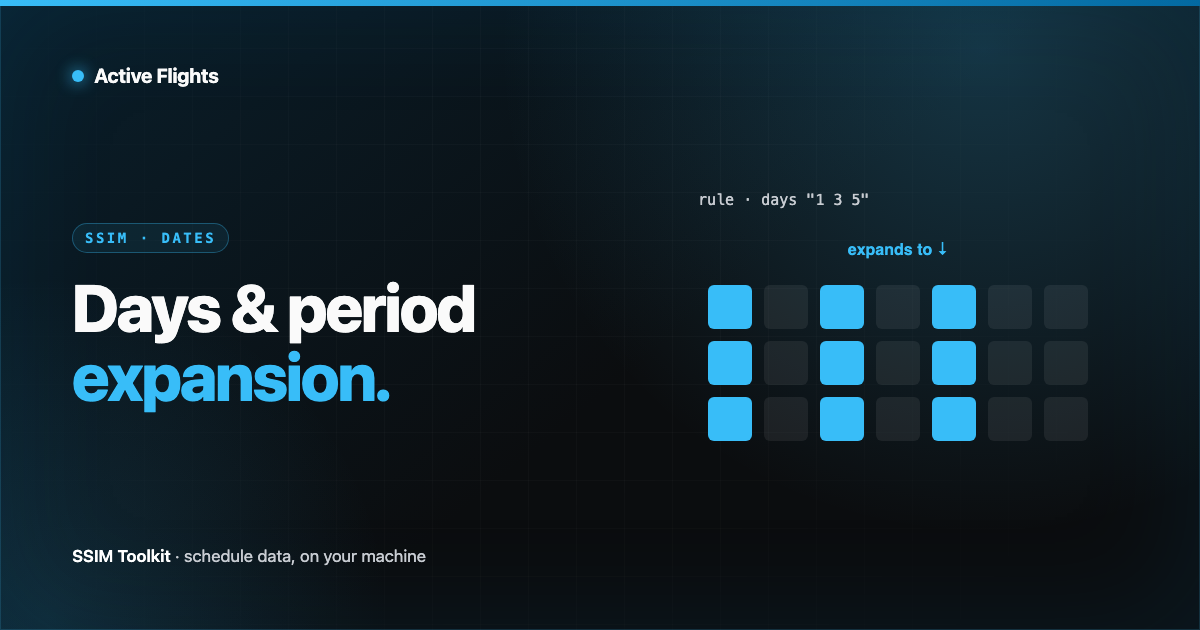
Days of operation and period expansion: the date math that breaks parsers
A single SSIM flight-leg line isn't one flight — it's a rule that expands into many. Getting that expansion exactly right, across days-of-operation, frequency, and season edges, is where a lot of quiet bugs live.
Read article →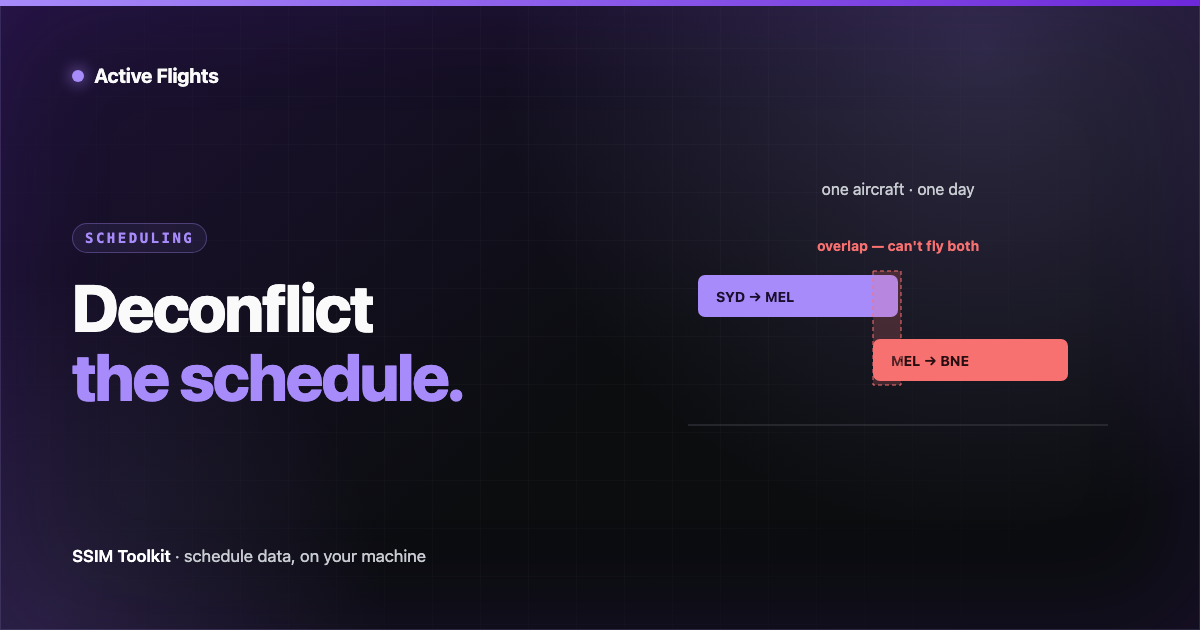
Deconfliction: catching overlapping flights before they bite
A schedule can look perfect and still be impossible — an aircraft in two places at once, a turnaround that can't be made. Deconfliction is finding those conflicts at the desk instead of at the gate.
Read article →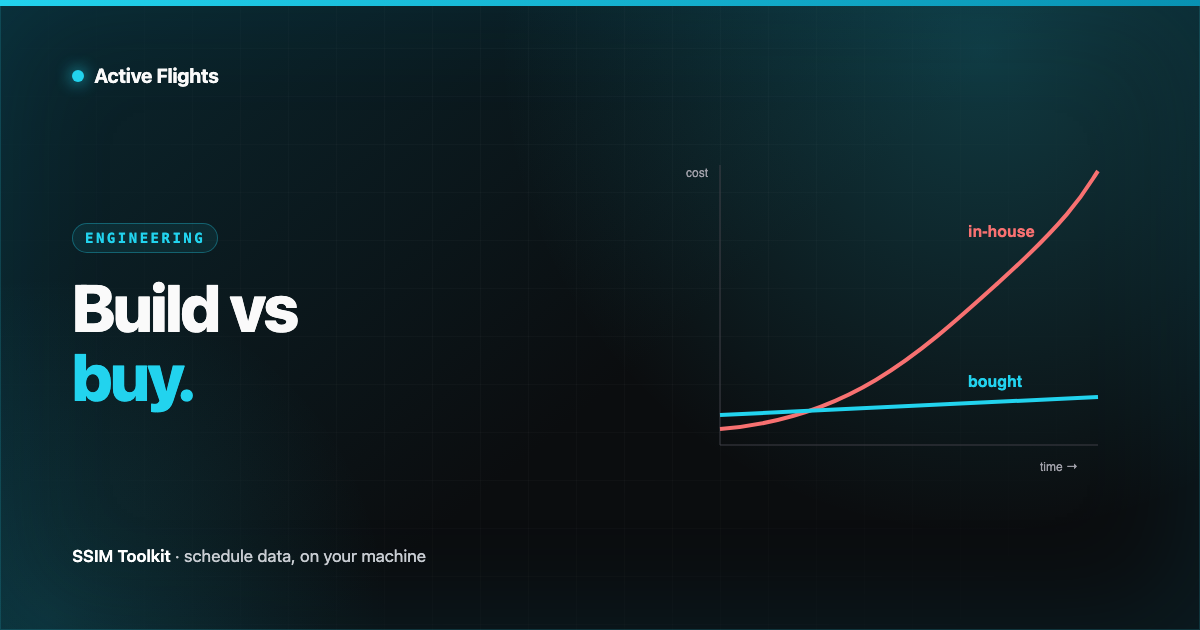
Build vs buy: the true cost of an in-house SSIM parser
Writing your own schedule parser looks cheap — one engineer, a week, done. The real cost is the maintenance treadmill that follows. Here's the total-cost-of-ownership case, honestly.
Read article →