
Schedule data, in the open.
Where airline schedule data is headed, why the industry's tooling is ripe for a reset, and notes from building SSIM Toolkit.
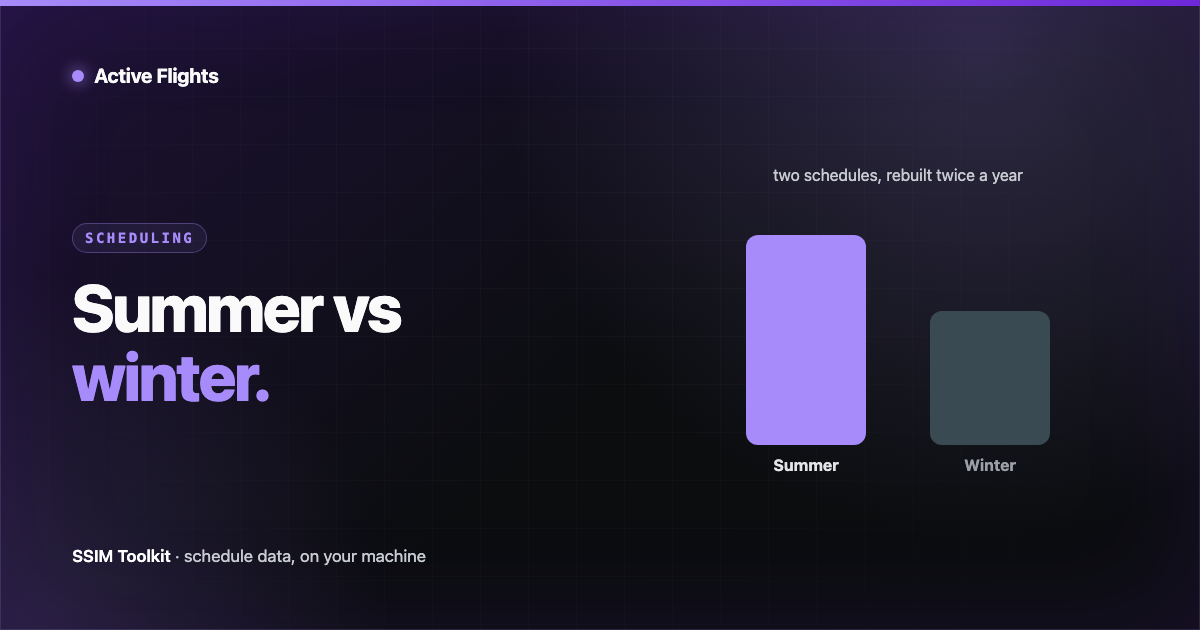
Summer vs winter: how airlines rebuild the schedule twice a year
Airlines don't run one schedule — they run two, rebuilt every season. Here's why the summer and winter schedules differ, how the seasons are defined, and why 'what changed' is the question that never goes away.
Read article →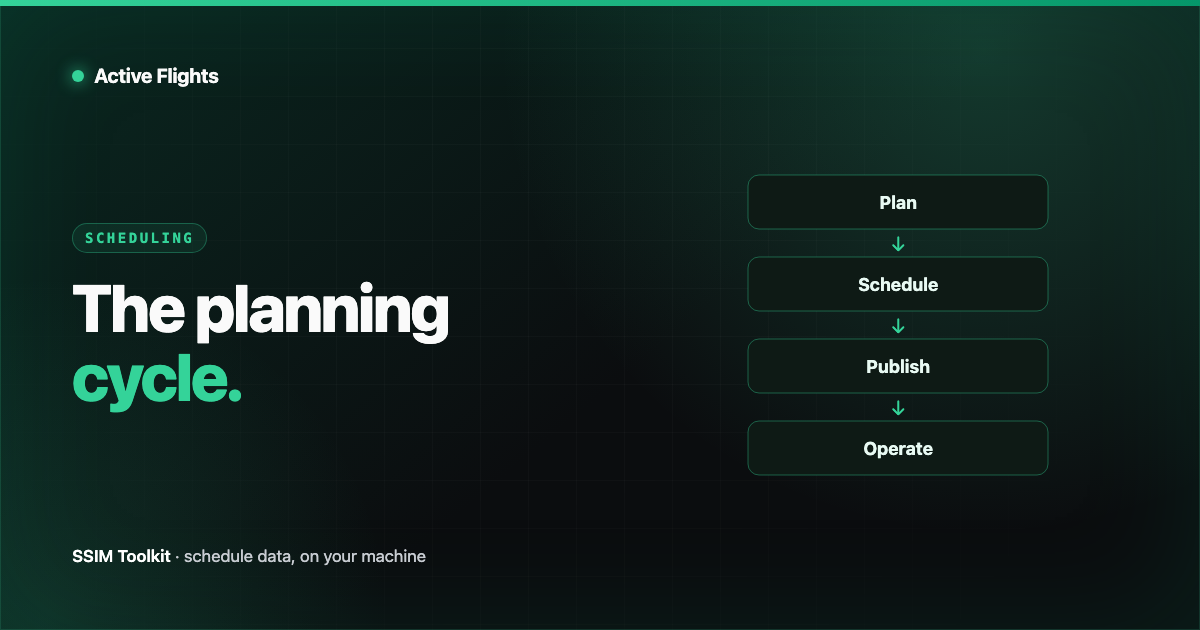
The airline planning cycle, end to end
How a flight goes from a line on a network plan to an aircraft at a gate — network planning, scheduling, fleet assignment, slots, publication, and day-of-ops — and where schedule data ties it all together.
Read article →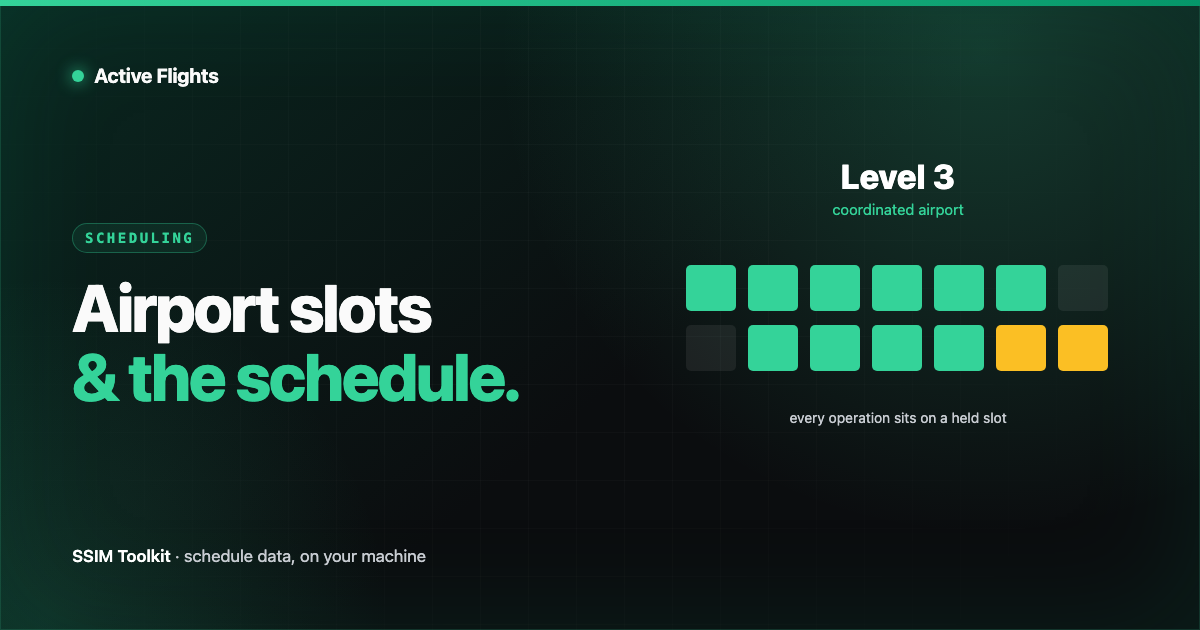
Airport slots and the schedule: a plain guide to coordination (WASG basics)
At the world's busiest airports you can't just publish a flight — you need a slot. Here's how slot coordination works, the three airport levels, and why the schedule and the slot book have to agree.
Read article →
The data-quality edge cases that break schedule parsers
A field guide to the real-world quirks in SSIM feeds — time modes, overnight arrivals, DST, operational suffixes, season edges — that turn a 'simple' fixed-width parser into a maintenance treadmill.
Read article →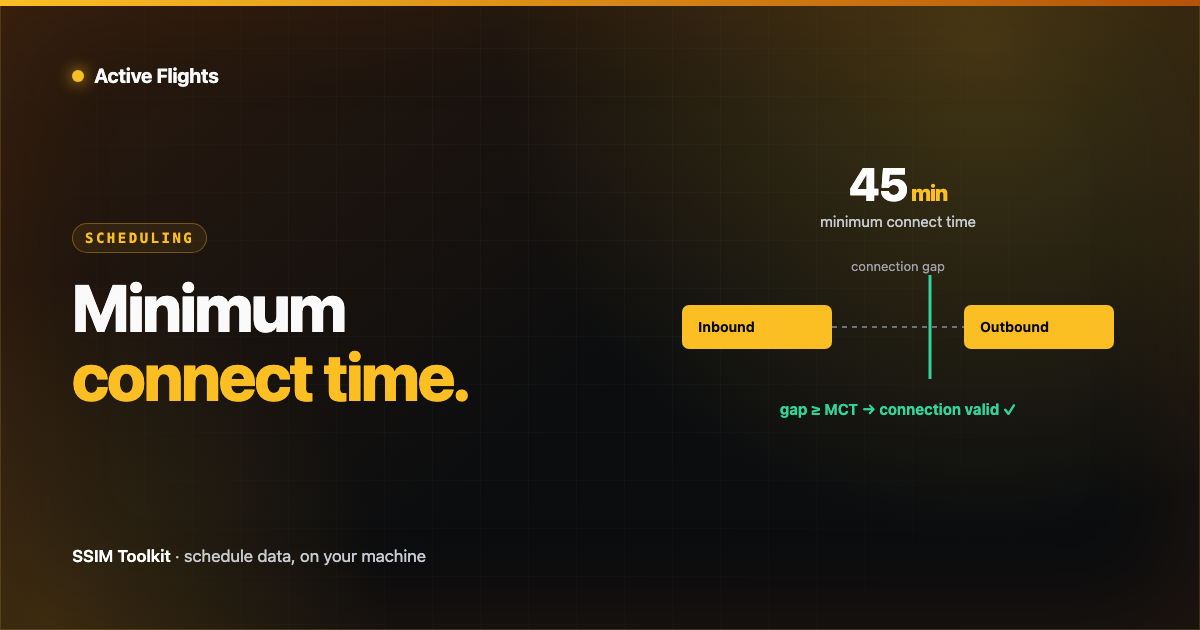
Minimum Connect Time (MCT): the hardest number in scheduling
MCT decides whether a connection is sellable — and it's conditional, per-airport, and lives outside the schedule file. Here's why this one number is so easy to get wrong, and what it takes to get it right.
Read article →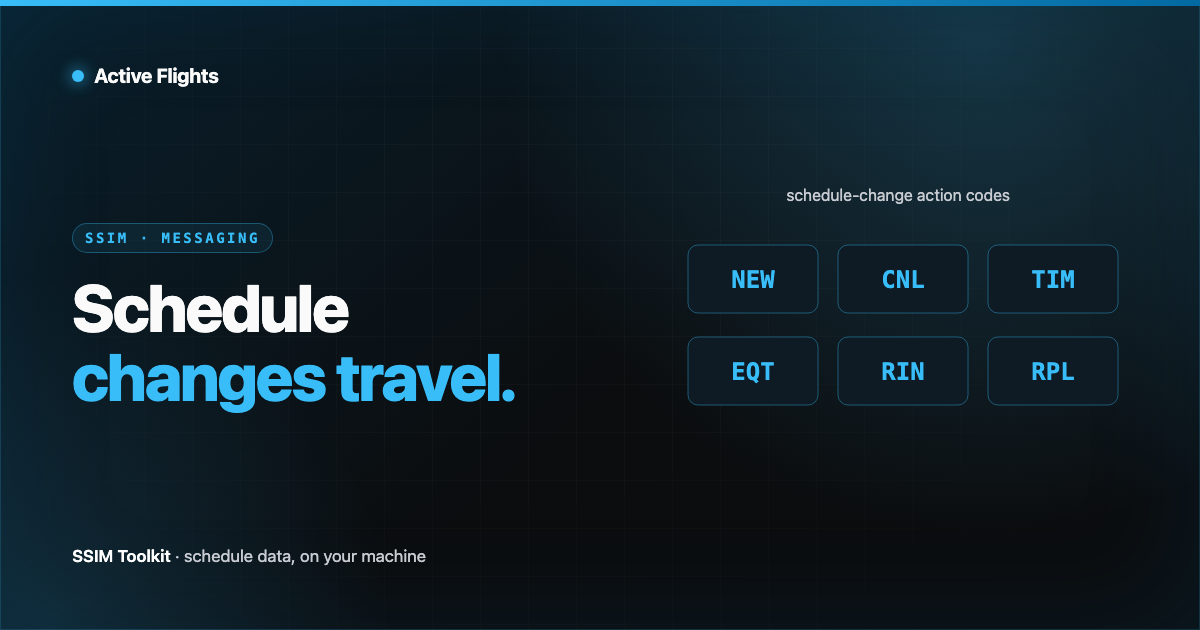
SSM and ASM: how schedule changes actually travel
A schedule is published once, then changed constantly. SSM and ASM are the IATA messages that carry those changes — bulk and ad-hoc — with action codes like NEW, CNL, TIM and EQT. Here's how they work.
Read article →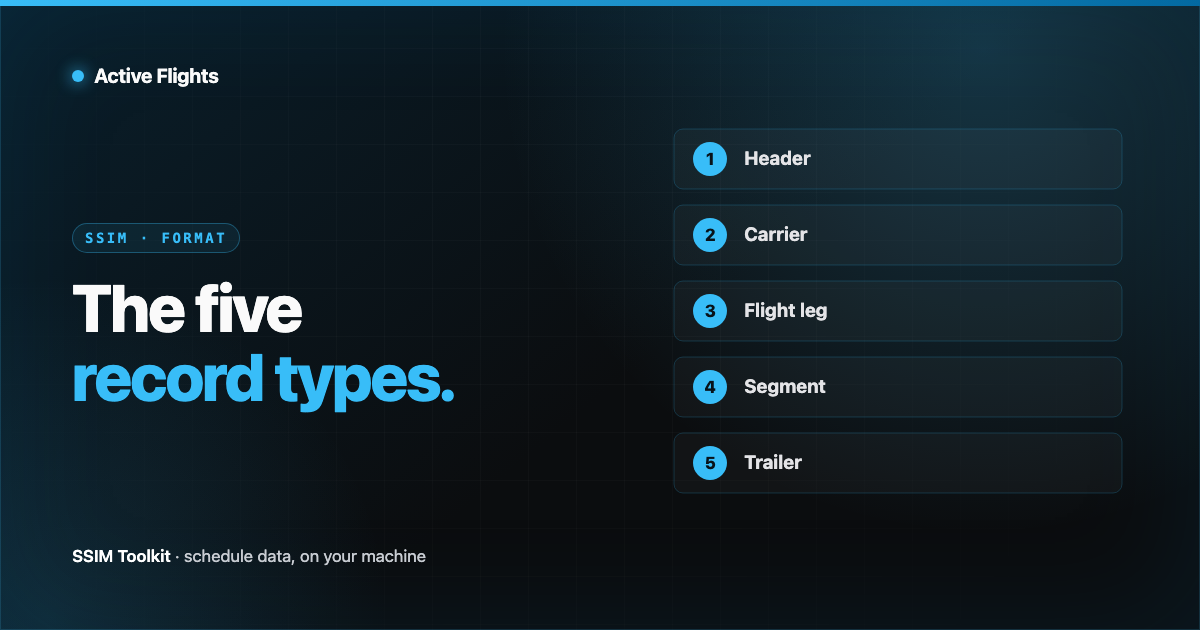
SSIM Chapter 7 record types, explained: reading a schedule file end to end
A field-level walk through the SSIM record types — header, carrier, flight leg, segment data, and trailer — with a sample file, the fields that matter, and the gotchas that bite parsers.
Read article →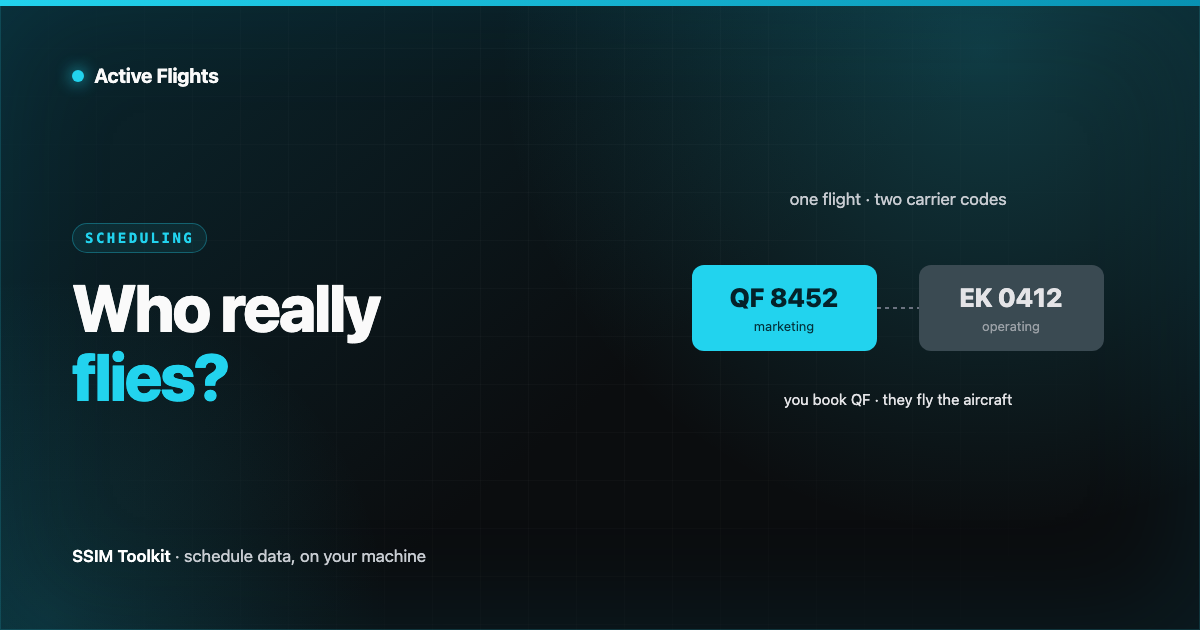
Codeshares, wet leases, and operating carriers: reading who really flies
The flight number you book isn't always the airline that flies you. Here's the difference between marketing and operating carriers, codeshares, and wet/dry leases — and how it all shows up in the schedule.
Read article →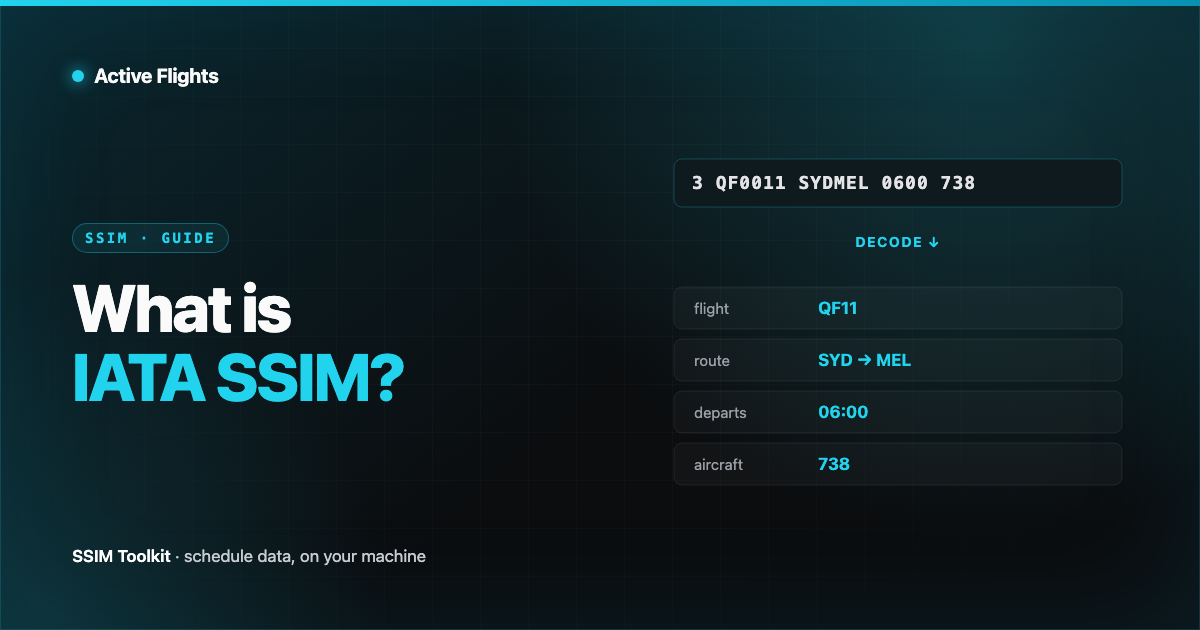
What is IATA SSIM? A plain-English guide to the format that runs airline schedules
SSIM is how the airline industry exchanges its schedules — a fixed-width, 200-byte text format that's deceptively simple and genuinely hard to get right. Here's what it is and why it matters.
Read article →